Washington reportedly opens talks with Myanmar’s military; Bangladesh seeks regional backing for Rohingya return
Washington’s reported contacts with Myanmar’s military signal a more transactional diplomatic approach, while Bangladesh is seeking broader regional involvement to make Rohingya repatriation safe, voluntary and sustainable. Watch whether engagement with Naypyidaw produces measurable humanitarian commitments, given contested control of Rakhine and the risk of strengthening the military’s international standing.
Tracking: NUG · Rohingya · Myanmar
Geography: Myanmar, Rakhine State, Bangladesh
Washington Reportedly Engages Myanmar’s Military in a Diplomatic Shift
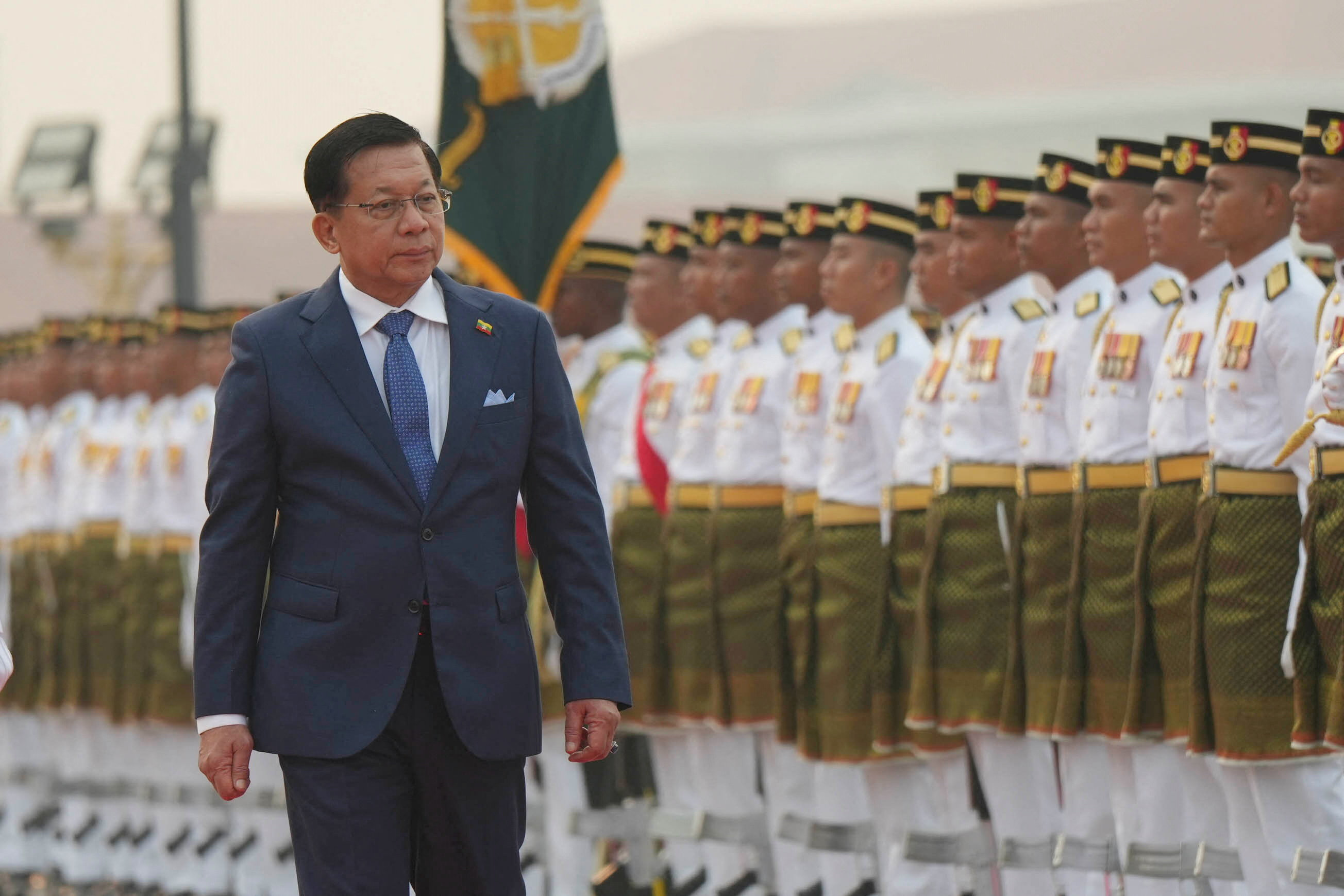
Washington has reportedly opened direct talks with Myanmar’s military-installed government, according to an October 8 Reuters investigation cited by Daily Sun.
Senior US officials engaged Min Aung Hlaing over a detained American businessman, online scam networks and access to rare-earth deposits—an apparent move toward transactional diplomacy after years of isolation following the 2021 coup.
For Bangladesh, the opening could provide another channel to press for the voluntary, safe and dignified return of more than one million Rohingyas.
But the talks may also strengthen the military leadership’s international standing without improving conditions for displaced people: much of Myanmar’s territory is contested, while rare-earth mines and scam networks often lie beyond Naypyidaw’s effective control.
Bangladesh should push Washington, China, India, Malaysia and ASEAN for measurable humanitarian commitments and consequences for noncompliance.
Key facts:
Why it matters: Bangladesh could gain a new channel for raising Rohingya rights with Myanmar’s military, but Washington’s priorities on cybercrime, detainees and critical minerals may push humanitarian concerns to the margins.
Direct engagement could also confer legitimacy on the military leadership without producing concessions on civilian protection or repatriation.
The talks’ practical impact will depend on whether Washington can influence actors controlling contested borderlands and criminal networks.
Bangladesh’s strongest option is coordinated diplomacy with China, India, Malaysia and ASEAN, tied to measurable humanitarian benchmarks and consequences for noncompliance.
Bangladesh seeks regional alliance for sustainable Rohingya repatriation

Bangladesh said on October 11 it would intensify regional and international diplomacy to secure the safe, voluntary, dignified and sustainable return of Rohingya refugees from Myanmar.
At a Dhaka seminar, the home minister argued Bangladesh cannot achieve repatriation alone and called for coordinated roles for China, ASEAN, the United Nations and Japan.
The minister said Rakhine’s security and geopolitical situation is more complex because the Arakan Army controls a large or significant part of the state alongside Myanmar’s de jure government.
Dhaka is pursuing formal and informal diplomatic channels, with Japan’s cooperation and a prime-ministerial visit expected later this month. The two reports identify the home minister differently, as Salahuddin Ahmed and Asaduzzaman Khan.
Key facts:
Why it matters: Dhaka is framing repatriation as a regional security and diplomatic problem rather than a bilateral issue with Myanmar.
A broader alliance could increase international involvement and share diplomatic pressure, while the Arakan Army’s territorial control means any workable arrangement may require engagement beyond Myanmar’s de jure government.
For Rohingya refugees, Bangladesh’s stated emphasis on safe, voluntary and dignified return preserves key protection conditions, but the announcement remains a diplomatic effort rather than a repatriation agreement.
The next indicators are whether the Japan visit produces concrete steps and whether China, ASEAN and the United Nations join a coordinated process.