SEANF expels Myanmar rights commission; US opens talks with military; OIC backs Rohingya genocide case
This edition tracks competing forms of international pressure and engagement: SEANF’s expulsion and the OIC’s renewed ICJ support sustain institutional and legal scrutiny, while Washington’s reported talks and Myanmar’s maritime outreach to China expand official contacts. The key question is whether new strategic and economic ties will weaken accountability efforts; the OIC statement offers diplomatic backing but no new enforcement mechanism or immediate protection for Rohingya refugees.
Tracking: NUG · Rohingya · Myanmar
Geography: Myanmar, Rakhine State, Bangladesh
SEANF Expels Myanmar Rights Commission, Cancels Its 2027 Chairmanship
SEANF announced on October 19 that it had disqualified Myanmar’s National Human Rights Commission (MNHRC), stripping it of the forum’s rotating 2027 chairmanship.
The regional forum’s governing board said a formal review found the commission no longer met its definition of a national human rights institution under the Paris Principles, which require independence and a legal mandate to protect rights.
The board adopted the decision on October 1, effective immediately, after consensus among five member institutions.
MNHRC rejected the review in a September 24 letter and September 26 statement, but SEANF said those responses did not resolve its concerns; the commission is now barred from the forum’s 23rd annual conference and other meetings.
It may reapply if it demonstrates “discernible efforts” toward compliance.
Key facts:
Why it matters: The immediate consequence is institutional: MNHRC loses its regional seat, upcoming chairmanship, and access to SEANF meetings.
That removes a formal platform for Myanmar’s commission in regional human-rights cooperation, while SEANF presents the expulsion as a defense of its credibility and accountability standards.
The next point to watch is whether MNHRC seeks readmission and what evidence SEANF would accept as compliance. The decision shows that membership consequencnes can follow a review even when the institution disputes the process and rejects the findings.
Myanmar Ambassador Pitches Maritime Cooperation at China Conference

Myanmar’s ambassador to China, U Zaw Win Myint, used the 2026 World Maritime Equipment Conference in Fuzhou to promote expanded maritime and economic cooperation with China.
Speaking at the 15–18 October event, he pointed to Myanmar’s more-than-2,000-kilometre coastline and highlighted opportunities in sustainable fisheries, aquaculture, maritime transport and logistics.
The remarks framed maritime cooperation as part of regional connectivity and Myanmar’s blue-economy development.
He presented the “Two Countries, Twin Parks” model as a route to increase seafood-processing capacity, modernize cold-chain logistics, improve product quality and connect Myanmar’s economic zones and ports with Fujian infrastructure.
He also reaffirmed Myanmar’s intention to deepen maritime cooperation with China and ASEAN members under the Five Principles of Peaceful Coexistence. Approximately 150 ambassadors and diplomats attended the conference.
Key facts:
Why it matters: The appearance gives Myanmar-China relations a practical economic agenda centered on ports, logistics, fisheries and regional connectivity.
For Myanmar, the pitch seeks access to Fujian’s maritime infrastructure and processing capabilities; for China, it identifies sectors for potential cooperation along Myanmar’s coastline.
The report describes a diplomatic pitch rather than a signed agreement or completed project. The next indicator will be whether the “Two Countries, Twin Parks” framework produces concrete investments, infrastructure links or new maritime programs.
Myanmar Consul-General Meets 28 Scholarship Students in Kunming

Myanmar’s consul-general in Kunming met 28 Myanmar scholarship students on 17 October 2026, bringing together students studying in Yunnan and Guizhou provinces in person and others online.
The meeting took place at the Myanmar Consulate-General in Kunming and included students at universities in other cities.
Consul-General U Zeyar Myo Myint urged students to follow host-country laws and university rules, pursue research that could support Myanmar’s development, and use their expertise in the country’s interests.
Students discussed their academic experiences, circumstances and challenges; the consul-general offered recommendations and coordinated assistance on the issues raised.
The event was an administrative and diplomatic engagement focused on student conduct, academic contribution and consular support, rather than a new policy announcement.
Key facts:
Why it matters: The meeting shows Myanmar’s consular mission maintaining a direct channel with scholarship students across its jurisdiction.
It also reinforces the authorities’ expectation that overseas students apply their training toward Myanmar’s development and national interests.
The immediate outcome was practical: students received recommendations and consular assistance for issues they raised. The next meaningful indicator will be whether the consulate’s coordination leads to further support or follow-up engagement.
Trump administration opens Myanmar talks over sanctions and rare-earth access
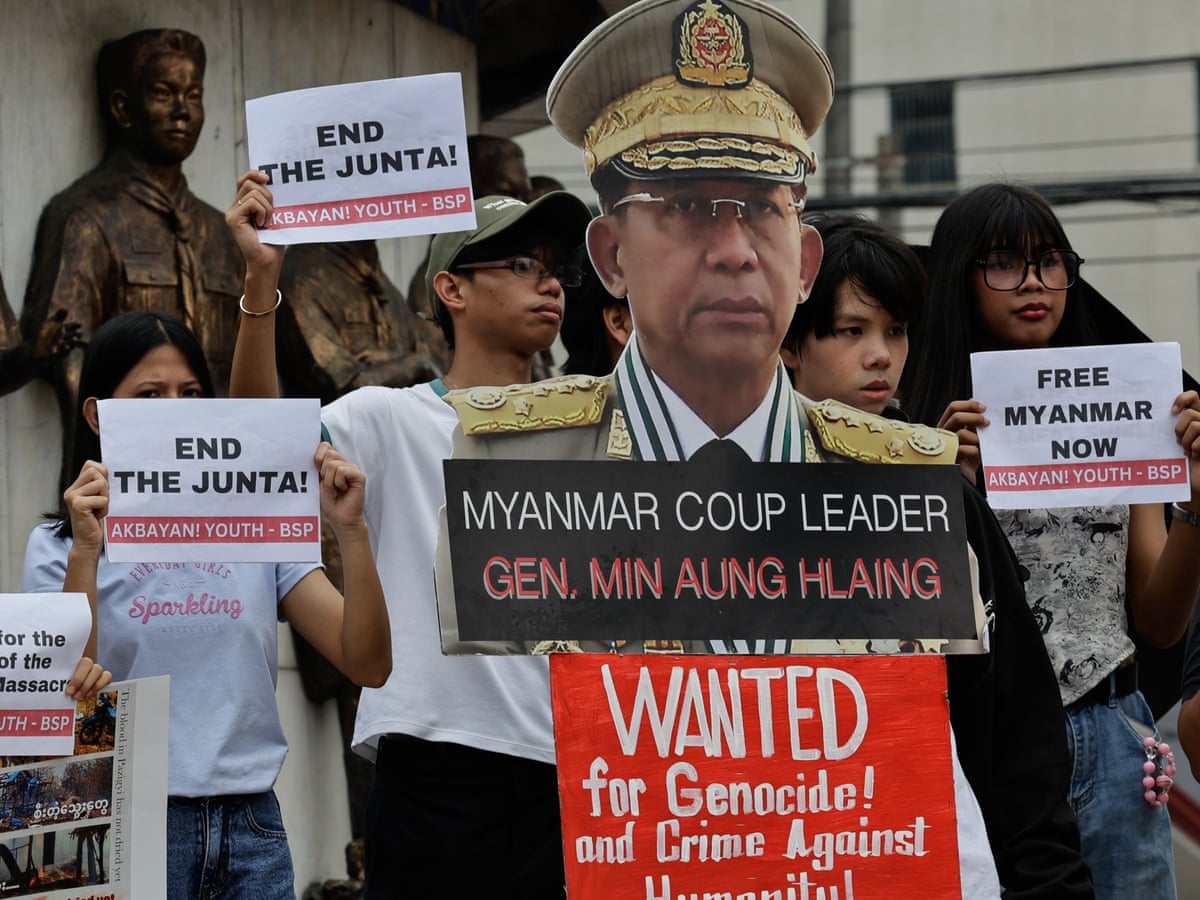
The Trump administration has opened direct talks with Myanmar’s military regime, overturning nearly a decade of united Western policy, according to the Guardian.
The article says Washington is discussing a possible sanctions rollback and that Michael Vance, assistant secretary of state for intelligence and research, visited Naypyidaw earlier this month; his trip included talks with generals beyond the stated goal of securing a US citizen’s release.
The reported focus was access to rare-earth minerals rather than restoring democracy or ending the military’s war. The shift benefits Min Aung Hlaing’s government by giving it a propaganda gain, while alarming democracy activists and other Western governments.
It also risks weakening pressure over the Rohingya genocide and military rule as Washington pursues minerals largely flowing to China.
Key facts:
Why it matters: Min Aung Hlaing’s government gains external engagement it can use to bolster its legitimacy while continuing a war linked to mass death and displacement.
The generals also gain leverage from a resource Washington wants to wrest from China, potentially making strategic access compete with accountability for genocide and military rule.
The immediate losers are democracy activists and Western governments that had maintained a common pressure policy.
Key watchpoints are whether sanctions are eased, whether US contacts expand beyond minerals, and whether Washington abandons its earlier demand to prosecute those responsible for atrocities.
OIC Reaffirms Support for Rohingya Genocide Case at ICJ
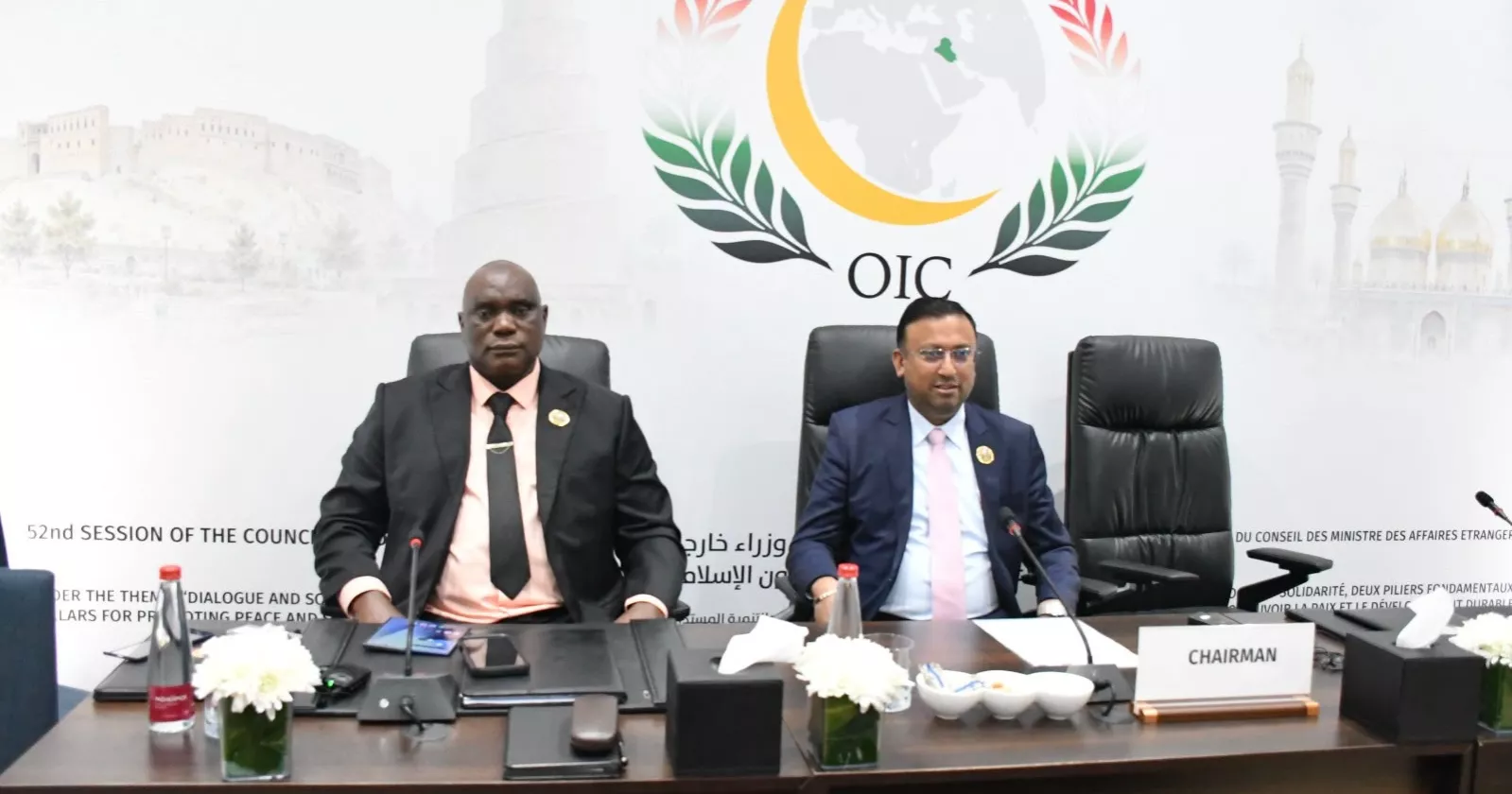
At a ministerial meeting in Baghdad on October 18, OIC member states renewed support for The Gambia-backed genocide case against Myanmar at the International Court of Justice.
Bangladesh, which co-chaired the session, urged the 57-member bloc to turn solidarity into collective humanitarian and legal action.
The reaffirmation came as Rohingya refugees remain dependent on aid in Bangladesh and the ICJ is expected to rule later this year on whether Myanmar committed genocide.
The statements preserve diplomatic backing for accountability but stop short—at least in the reported commitments—of announcing sanctions, stronger refugee protection, or a new enforcement mechanism.
Bangladesh highlighted a five-point plan calling for safe, dignified and voluntary repatriation. For refugees, the legal process has not yet produced immediate protection.
Key facts:
Why it matters: The reaffirmation strengthens Bangladesh’s diplomatic position and keeps the Rohingya case on the OIC’s agenda ahead of the expected ICJ ruling. It signals that member states still see international legal accountability as central to any durable resolution.
But the practical gap remains. The Baghdad meeting, as reported, produced no sanctions, enforcement mechanism, or new prostection commitment; the next test is whether OIC governments fund aid, press Myanmar, and reject forced returns.
Without those steps, legal support may coexist with continued refugee dependence and dangerous flight.
<!-- newsltr-spacer --><!-- newsltr-block:%7B%22block%22%3A%7B%22id%22%3A%22date%22%2C%22type%22%3A%22date%22%2C%22content%22%3A%22long%22%2C%22prompt%22%3A%22%22%2C%22inputRequired%22%3Afalse%2C%22inputLabel%22%3A%22%22%2C%22level%22%3A2%2C%22url%22%3A%22%22%2C%22aiEnabled%22%3Afalse%2C%22sourceIds%22%3A%5B%5D%2C%22keywords%22%3A%5B%5D%2C%22sourceSearch%22%3A%22selected%22%2C%22allowAiSources%22%3Afalse%2C%22includeImages%22%3Afalse%2C%22maxHeadingLevel%22%3A3%2C%22imageSourceMode%22%3A%22auto%22%2C%22imageFit%22%3A%22contain%22%2C%22imageAspect%22%3A%22wide%22%2C%22footerCopyright%22%3A%22%22%2C%22footerDetails%22%3A%22%22%2C%22secondaryContent%22%3A%22%22%2C%22style%22%3A%7B%7D%7D%2C%22markdown%22%3A%22Monday%2C%20October%2019%2C%202026%22%7D -->