Over 500 Rohingya feared dead in two shipwrecks
This week’s developments are dominated by the tragic loss of over 1,000 Rohingya at sea in two incidents, underscoring the deadly consequences of ongoing persecution and stalled repatriation. While the NUG has built underground hospitals and provided flood aid, and KSrelief signed a $2. 5 million water deal with IOM, these efforts are undercut by a 64% funding gap in WHO-led health coordination and Bangladesh’s urgent call for BIMSTEC to pressure Myanmar. The core tension lies between isolated humanitarian wins and the systemic failures—conflict in Myanmar, camp conditions, and insufficient international action—that continue to drive Rohingya onto perilous journeys.
Monday, Jul 20, 2026
Tracking: NUG · Rohingya · Myanmar
Geography: Myanmar, Rakhine State, Bangladesh, Cox's Bazar, Sittwe
1. Over 500 Rohingya Feared Dead in Two Shipwrecks Off Myanmar

The UN’s migration and refugee agencies reported on July 16 that more than 500 people are feared dead after two boats capsized off Myanmar.
One vessel carrying roughly 250 passengers lost contact shortly after departing Rakhine State in late June; a second with about 280 people sank off the Ayeyarwady coast on July 8.
Most passengers were Rohingya, some of whom had traveled from refugee camps in Bangladesh’s Cox’s Bazar. These incidents come outside the regular sailing season, when monsoon rains and flooding heighten risks.
The UN noted that nearly 300 people have already died or gone missing in the Andaman Sea and Bay of Bengal this year.
The agencies called for enhanced search-and-rescue efforts and for addressing the root causes—escalating conflict in Myanmar and limited opportunities in the camps—that drive Rohingya to attempt these deadly journeys.
Key facts:
Two boats carrying over 500 people disappeared off Myanmar's coast since late June.
One boat with ~250 lost contact; the other with ~280 sank on July 8 near Ayeyarwady.
Passengers were mostly Rohingya, some from Cox's Bazar refugee camps in Bangladesh.
Nearly 300 deaths or disappearances already recorded in the region this year.
IOM and UNHCR jointly called for rescue efforts and action against smuggling networks.
Why it matters: The mass casualty event underscores the failure of regional protection frameworks for Rohingya, who face state-sponsored persecution in Myanmar and dire conditions in Bangladesh’s camps.
The junta’s ongoing war with the Arakan Army in Rakhine State is fueling departures, while monsoon season and trafficking networks magnify risks. With no durable solution in sight, further tragedies are likely.
Watch for increased international pressure on Myanmar and Bangladesh, and potential shifts in UN or ASEAN diplomatic positions on the Rohingya crisis.
2. NUG sends flood aid to Rakhine, completes 10 underground hospitals
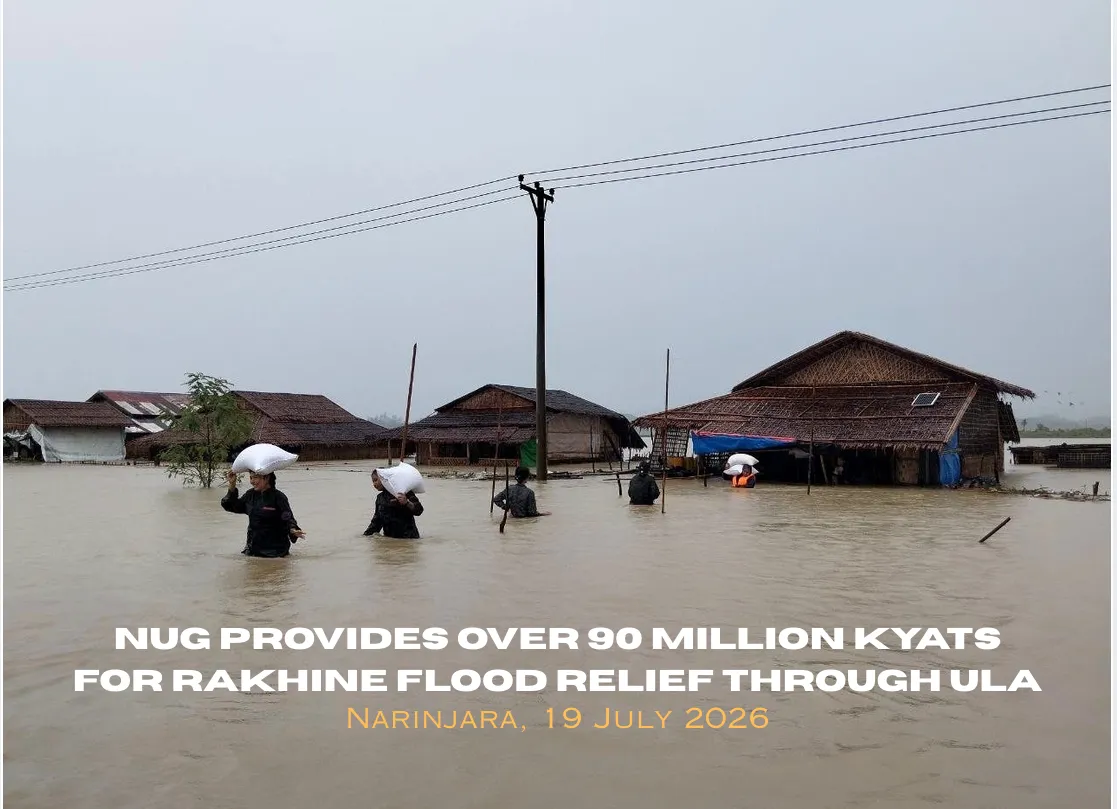
On July 17, Myanmar’s National Unity Government (NUG) provided over 90 million kyats (150,000 Chinese yuan) in flood relief to Rakhine State, channeled through the Arakan People’s Revolutionary Government under the United League of Arakan/Arakan Army.
The aid targets more than 100,000 people hit by severe monsoon floods across 11 townships. Separately, the NUG announced that ten bomb-proof underground hospitals have been completed nationwide, funded by international donations since 2024.
Health Minister Dr. Shwe Pon confirmed some are already operational. The hospitals are intended to ensure secure healthcare access amid junta airstrikes, which killed 67 civilians in June alone according to the Assistance Association for Political Prisoners.
Key facts:
NUG donated 150,000 Chinese yuan (over 90 million kyats) on July 17 via the ULA/AA-linked APRG.
Floods affected over 100,000 people in 11 Rakhine townships since early July.
Ten underground hospitals completed across Myanmar as of July 2026, up from two under construction in June 2025.
Junta airstrikes killed 67 civilians in June 2026, per AAPP.
Why it matters: The NUG’s dual actions in Rakhine and nationwide demonstrate its ability to deliver aid and build infrastructure despite the junta’s control.
Partnering with the Arakan Army for flood relief signals a strategic alignment in contested areas, while the underground hospitals provide a resilient healthcare network for civilians under bombardment.
These moves could strengthen the NUG’s legitimacy and operational reach, but also risk escalating junta targeting of both aid channels and medical facilities.
3. Saudi KSrelief Signs $2.5 Million Water Deal with IOM for Rohingya Refugees

On July 20, 2026, the King Salman Humanitarian Aid and Relief Center (KSrelief) signed a $2.5 million cooperation agreement with the International Organization for Migration (IOM) to provide safe water and sanitation services for Rohingya refugees in Bangladesh's Cox's Bazar camps.
The agreement was signed in Riyadh by KSrelief's Eng.
Ahmed bin Ali Al-Baiz and IOM Regional Director Othman Belbeisi. This project addresses critical gaps in WASH (water, sanitation, and hygiene) infrastructure for nearly one million stateless Rohingya living in overcrowded camp conditions.
The funding comes amid ongoing humanitarian crises driven by the Myanmar military junta's persecution and the stalled repatriation process, which has left refugees dependent on international aid.
Key facts:
Agreement signed July 20, 2026, in Riyadh by KSrelief and IOM.
Project value is $2.5 million for water and sanitation services.
Targets Rohingya refugees in Cox's Bazar, Bangladesh camps.
Signatories: Eng. Ahmed bin Ali Al-Baiz (KSrelief) and Othman Belbeisi (IOM).
KSrelief is the Saudi humanitarian aid center under King Salman.
Why it matters: This funding directly addresses the chronic waterborne disease risks in Cox's Bazar, where overcrowding and monsoon seasons exacerbate sanitation failures.
For the Rohingya, who remain stateless after the 2017 crackdown by Myanmar's military, every new aid project underscores the absence of a political solution.
The Saudi-IOM partnership also signals continued Gulf engagement in the Rohingya crisis, which may influence broader diplomatic pressure on the Myanmar junta.
Downstream, improved WASH conditions could reduce NGO operational burdens and slightly ease tensions with host communities in Bangladesh, but the core issue of safe repatriation remains unresolved.
4. Bangladesh urges BIMSTEC to pressure Myanmar on Rohingya return
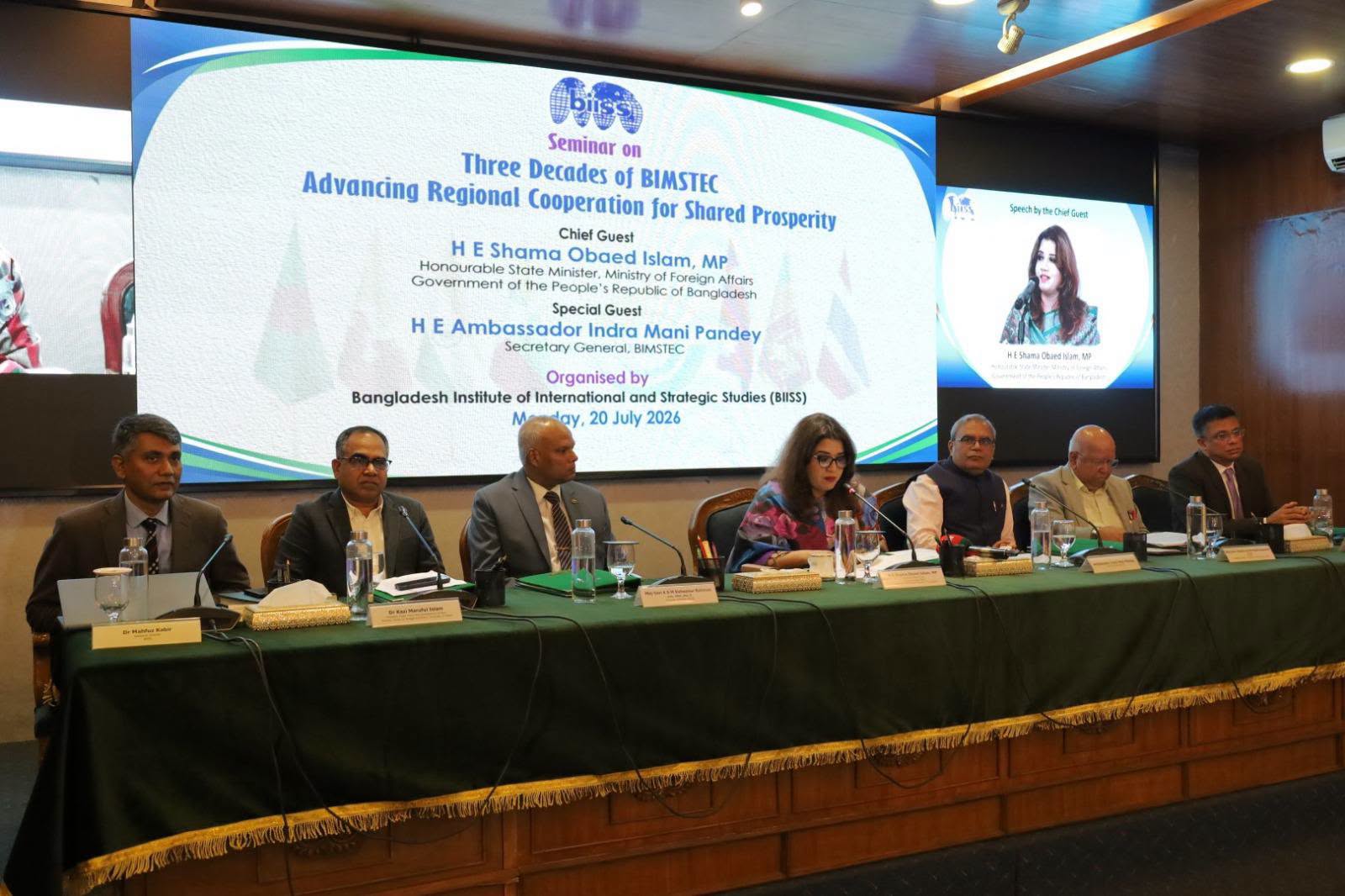
On July 20, 2026, Bangladesh State Minister for Foreign Affairs Shama Obaed Islam called on BIMSTEC member states to intensify international pressure on Myanmar to enable safe, voluntary and sustainable repatriation of Rohingya refugees.
She made the appeal at a seminar in Dhaka marking the regional bloc's three decades. Bangladesh, as current BIMSTEC chair, framed the Rohingya crisis as a shared regional responsibility.
The seminar also reviewed BIMSTEC's progress on connectivity, trade, and security cooperation, with participants urging stronger institutional capacity and action-oriented initiatives.
Key facts:
Shama Obaed Islam spoke at a July 20 seminar on BIMSTEC's three decades.
She urged BIMSTEC to exert effective international pressure on Myanmar.
The goal is safe, voluntary and sustainable Rohingya repatriation.
Bangladesh currently chairs BIMSTEC.
Seminar attended by officials, ambassadors, academics, and development partners.
Why it matters: Bangladesh is leveraging its BIMSTEC chairmanship to multilateralize the Rohingya crisis, aiming to counter Myanmar's military junta's intransigence on repatriation.
This shifts the issue from a bilateral deadlock to a regional security and humanitarian priority. For the junta, increased diplomatic isolation and coordinated pressure from South and Southeast Asian neighbors could complicate its legitimacy.
For the Rohingya in Cox's Bazar, any sustained regional engagement might open new pathways for protection and accountability, though concrete outcomes remain distant without Myanmar's cooperation.
5. WHO faces 64% funding gap for Rohingya health response
In June 2026, the World Health Organization supported health services for approximately 1.7 million Rohingya refugees and host community members in Cox's Bazar, Bangladesh.
WHO coordinated disease surveillance, outbreak response, routine immunization, and emergency preparedness across the camps. However, a 64% funding gap in Health Sector coordination threatens to reduce WHO's capacity to lead partners starting September 2026.
From July 2026, funding shortfalls will also weaken infectious disease surveillance and outbreak detection, jeopardizing early warning systems in a densely populated refugee setting.
Key facts:
WHO served 1.7 million refugees and host community in June 2026.
WHO faces a 64% funding gap in Health Sector coordination.
Funding shortfalls will affect disease surveillance from July 2026.
Joint assessment of all 42 Primary Health Centres was completed.
Why it matters: The funding gap directly threatens the health of over a million Rohingya refugees already living in precarious conditions.
Weakened disease surveillance and coordination raise the risk of undetected outbreaks, particularly of measles and dengue, in overcrowded camps.
Without urgent donor replenishment, the WHO-led health response may face critical service disruptions by autumn 2026, compounding the humanitarian crisis.
6.530 Rohingya believed lost at sea after boats vanish from Rakhine
Two boats carrying an estimated 530 Rohingya asylum seekers departed Myanmar’s Rakhine State on June 29 and have not been heard from since. The vessels’ disappearance is equivalent to a jumbo jet full of people vanishing without a trace.
No further updates on the passengers’ fate have been reported. The incident underscores the ongoing peril facing Rohingya communities under the Myanmar military junta, who continue to flee persecution and conflict in Rakhine.
The boats’ route likely aimed for Southeast Asian destinations such as Indonesia, mirroring prior deadly crossings.
Key facts:
Two boats departed Rakhine State, Myanmar, on June 29.
Around 530 Rohingya asylum seekers were on board.
The boats have not been heard from since leaving.
The ships' disappearance is compared to a jumbo jet vanishing.
Why it matters: This mass disappearance highlights the failure of regional states and the international community to prevent Rohingya maritime tragedies, despite years of warnings.
The junta’s ongoing crackdown in Rakhine continues to drive civilians to deadly sea routes, while Bangladesh and Southeast Asian nations enforce increasingly restrictive border policies.
The incident pressures ASEAN and the UN to revive search efforts and refugee protections, though cooperation remains blocked by Myanmar’s military leadership.