Myanmar’s Junta Deepens Russian Ties as War Drives Regional Pressure
Myanmar’s military-backed government is strengthening ties with Russia through high-level diplomacy and a new trade-administration contract, even as its offensive in Karen State reportedly affects neighboring Thailand. At the same time, the EU is expanding humanitarian aid and Bangladesh is preparing a Rohingya justice dialogue, underscoring the widening gap between the junta’s external partnerships and the crisis facing civilians.
Monday, Aug 17, 2026
Tracking: NUG · Rohingya · Myanmar
Geography: Myanmar, Rakhine State, Chin State, Sagaing Region, Bangladesh
1. Min Aung Hlaing Leaves for Russia as Myanmar Seeks Strategic Backing
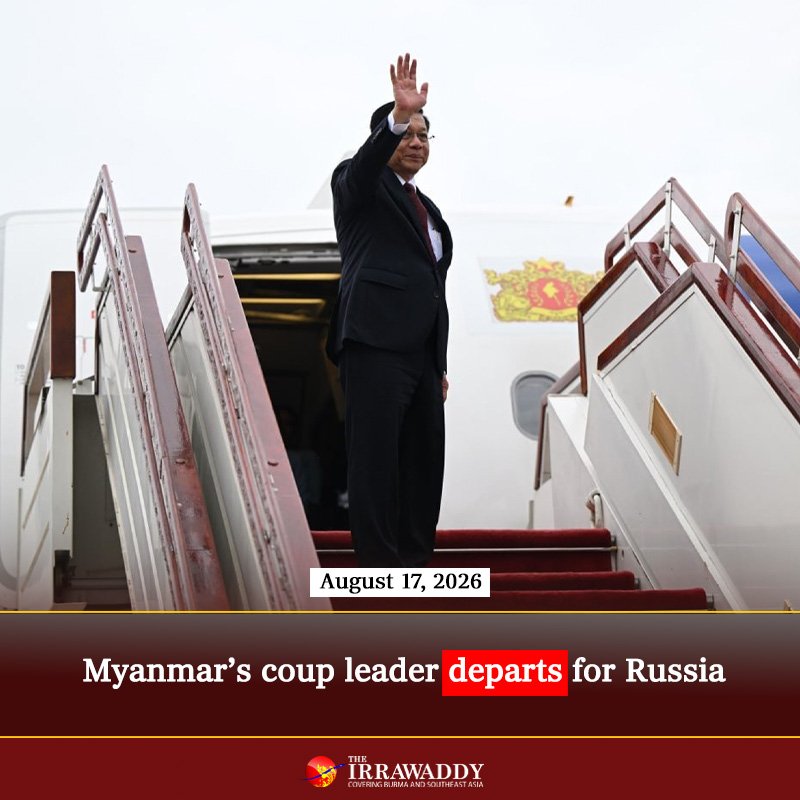
On Aug. 17, 2026, Myanmar’s military-backed president, Min Aung Hlaing, left Naypyitaw for Russia with cabinet members.
State media said he would meet President Vladimir Putin and other senior officials to discuss bilateral relations, economic, security and social affairs, and attend a Myanmar–Russia Business Forum.
The trip is part of Min Aung Hlaing’s recent outreach to China, India, Laos and Thailand, even as AP reports he remains largely isolated internationally.
Russia, alongside China, is a major supporter and arms supplier; Russian-made fighter jets are used in attacks on territory held by ethnic minority groups, including groups allied with pro-democracy resistance forces.
The visit follows his April inauguration after an election that U.N. experts and rights groups judged neither free nor fair. News.
az carried a same-day report on the Russia visit but added no substantive details in the supplied text.
Key facts:
Min Aung Hlaing departed Naypyitaw for Russia on August 17, 2026.
He is scheduled to meet Vladimir Putin and other senior Russian officials.
Myanmar’s delegation will discuss economic, security, social, and bilateral issues.
Russia and China are major supporters and arms suppliers to Myanmar.
Min Aung Hlaing also plans to attend a Myanmar–Russia Business Forum.
Why it matters: Russia gives Myanmar’s military-backed government a diplomatic channel and a venue to pursue security and economic cooperation while it faces international isolation.
The relationship also has direct conflict implications: AP links Russian-made aircraft to attacks on territory held by ethnic minority groups, including groups allied with pro-democracy resistance forces.
The supplied reporting announces no new settlement, humanitarian measure, or policy toward the NUG, Rohingya, or Rakhine State.
The next concrete indicators are whether the Putin meetings or business forum produce agreements, and whether military cooperation expands in contested areas.
2. Khaosod English reports Karen State offensive and cross-border rounds
The supplied material identifies a Khaosod English report dated August 17, 2026, titled “Myanmar military steps up Karen State offensive as stray rounds again cross into Thailand.
” Its headline indicates two linked developments: an intensified Myanmar military operation against Karen positions and renewed cross-border impact in Thailand.
However, the readable article content contains only site navigation, branding, and category links; it does not provide verifiable details about locations, casualties, weapons, responsible units, Thai government responses, displacement, or the armed groups involved.
The search snippet mentions airstrikes, aerial resupply, and homes in Tak, but the instructions exclude snippets as evidence unless those details also appear in the article text.
This briefing therefore records the reported development while avoiding unsupported specifics.
Key facts:
Khaosod English published the report on August 17, 2026.
The headline reports an intensified Myanmar military offensive in Karen State.
The headline says stray rounds again crossed into Thailand.
The supplied readable text contains no operational or casualty details.
Why it matters: The reported cross-border spillover places Thailand directly alongside an escalating conflict zone, but the supplied material does not establish the scale of damage or any official response.
Without the article’s substantive reporting, it is not possible to assess effects on civilians, displacement, humanitarian access, or Myanmar’s wider conflict dynamics.
The immediate information gap is itself important for monitoring: the next reliable update should clarify where the fighting occurred, whether Thai territory or residents were harmed, which forces were engaged, and whether authorities took security or diplomatic measures.
3. Junta awards trade software contract to Russian firm
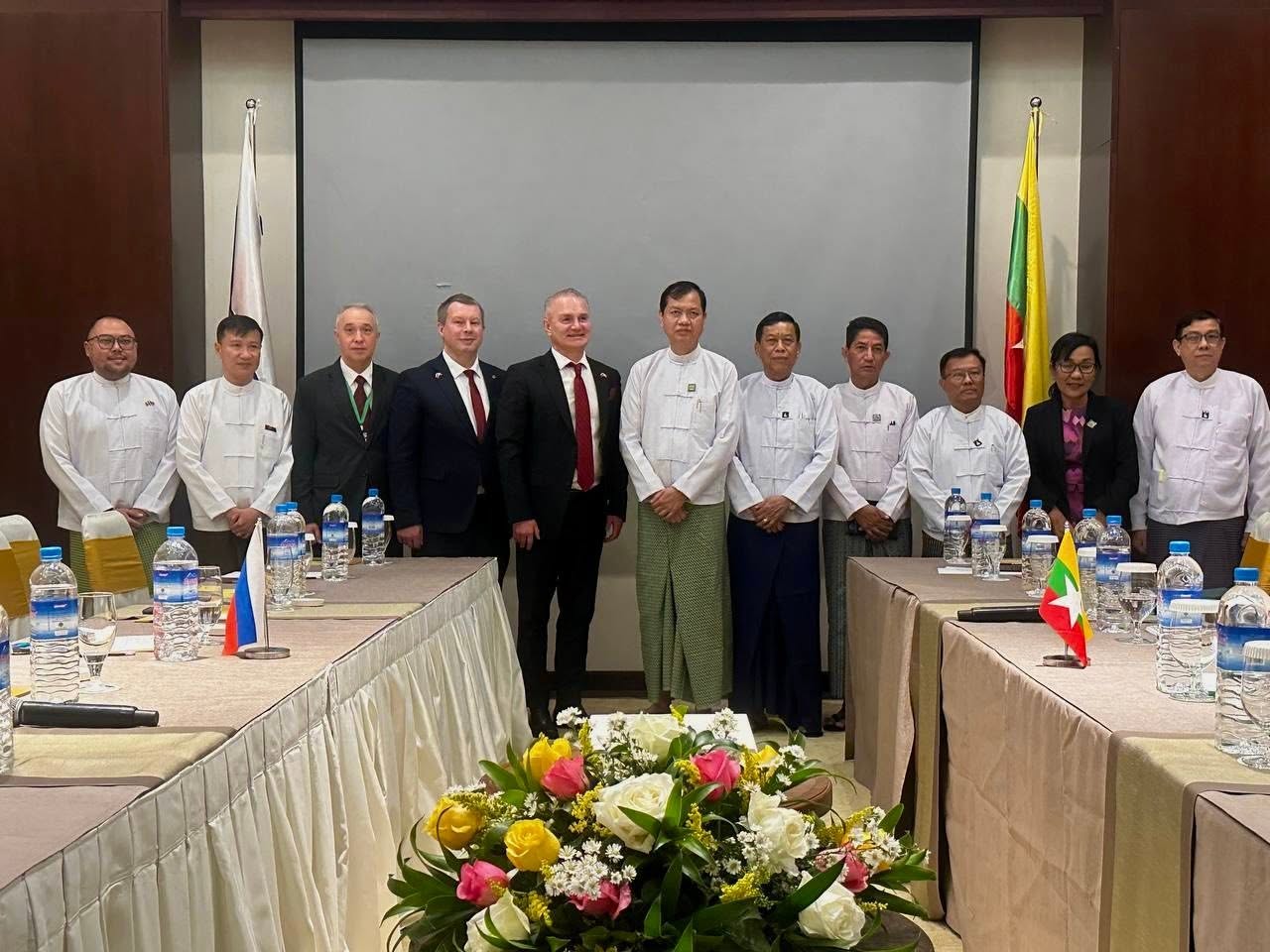
On August 12, Myanmar’s junta-controlled Customs Department signed a contract with the Myanmar branch of Russia’s Astra Consulting LLC in Naypyitaw.
The agreement covers the National Single Window Web Portal Project, a system intended to process import and export documentation. Myanmar Now describes Astra as a sanctioned Russian technology company with links to Russia’s security agencies.
The report does not provide the contract’s value, implementation timetable, or technical specifications, but it establishes a new role for the company inside Myanmar’s trade-administration infrastructure.
Key facts:
Myanmar Customs and Astra Consulting signed the contract in Naypyitaw on August 12.
The project is called the National Single Window Web Portal Project.
The portal is intended to process import and export documentation.
Astra Consulting’s Myanmar branch is participating in the project.
Myanmar Now describes Astra as linked to Russian security agencies.
Why it matters: The immediate institutional beneficiary is the junta-controlled Customs Department, which is assigning a Russian technology company a role in modernizing trade documentation.
If implemented, the portal could give the junta a more centralized system for handling import and export paperwork, although the available report does not establish how far development has progressed.
The agreement also gives a sanctioned Russian group an additional formal connection to Myanmar’s state administration. That may become significant for scrutiny of sanctions exposure, data governance, and the junta’s expanding ties with Russia.
The next concrete indicators are the system’s launch, contract value, participating agencies, and any further sanctions or diplomatic responses. Source: http://myanmar-now.
org/en/news/myanmar-junta-awards-major-trade-software-contract-to-sanctioned-russian-tech-group/
4. EU Adds €10.5 Million for Myanmar’s War-Affected Communities
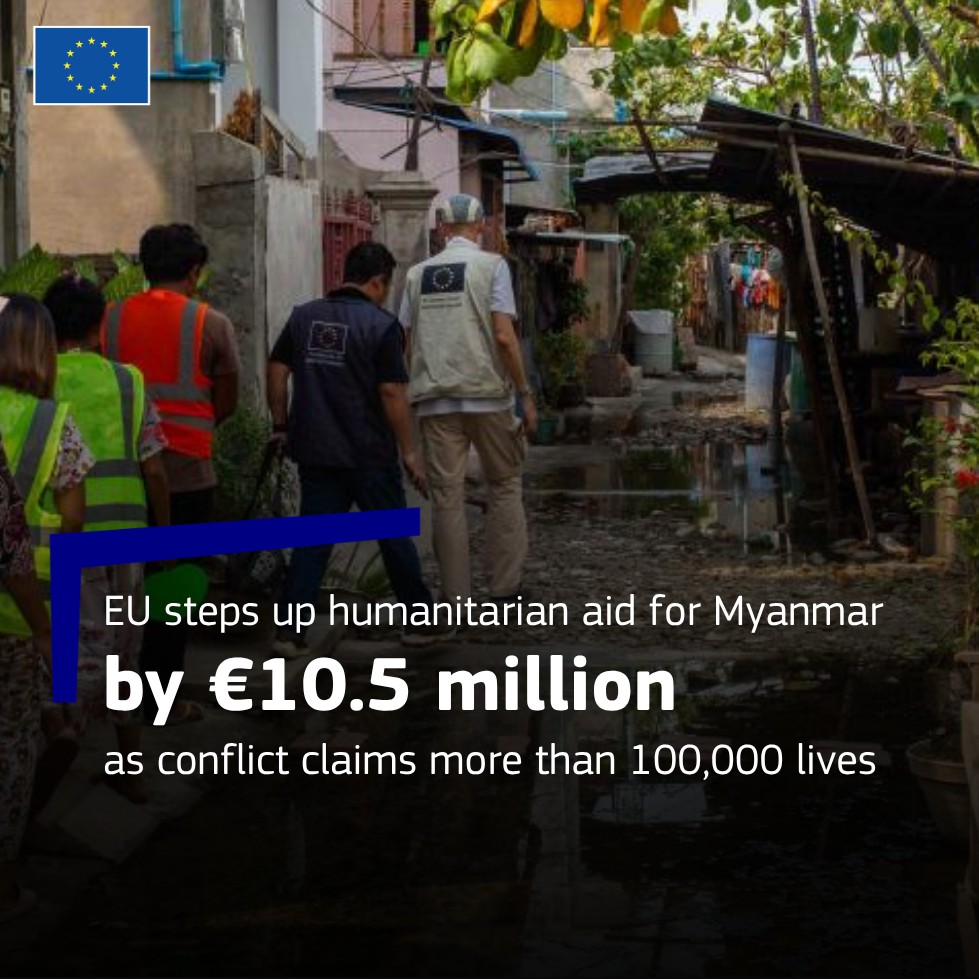
The European Union announced an additional €10.5 million in humanitarian aid for people affected by conflict, displacement and disasters in Myanmar, bringing its 2026 support to €49.1 million.
EU humanitarian partners will use the money for emergency healthcare, food, protection, shelter, water and sanitation, including after recent flash floods.
The funding arrives as the European Commission describes 16.2 million people as needing assistance and Myanmar as one of the world’s worst humanitarian crises.
Commissioner Hadja Lahbib said the crisis had expanded dramatically since the 2021 coup, amid a collapsing health system, a failing economy and severe hunger; the article also reports more than 100,000 lives lost since the coup and identifies landmine contamination as a major danger across the country.
Key facts:
EU announced €10.5 million in additional humanitarian aid for Myanmar.
EU humanitarian support for Myanmar reaches €49.1 million in 2026.
16.2 million people in Myanmar need assistance, according to the European Commission.
Aid includes healthcare, food, protection, shelter, water and sanitation.
More than 100,000 lives have been lost since February 2021.
Why it matters: The package gives EU humanitarian partners additional resources for immediate relief as conflict, displacement, disasters and landmine contamination compound civilian needs.
It also signals that the EU intends to maintain aid while, according to a Commission spokesman, other donors retreat.
The announcement does not specify how the money will be divided geographically, which organizations will receive it, or how access will be secured in contested areas.
Those details will determine whether assistance reaches people affected across Myanmar, including communities facing conflict and displacement.
5. Bangladesh to Host Dialogue on Justice for Rohingya
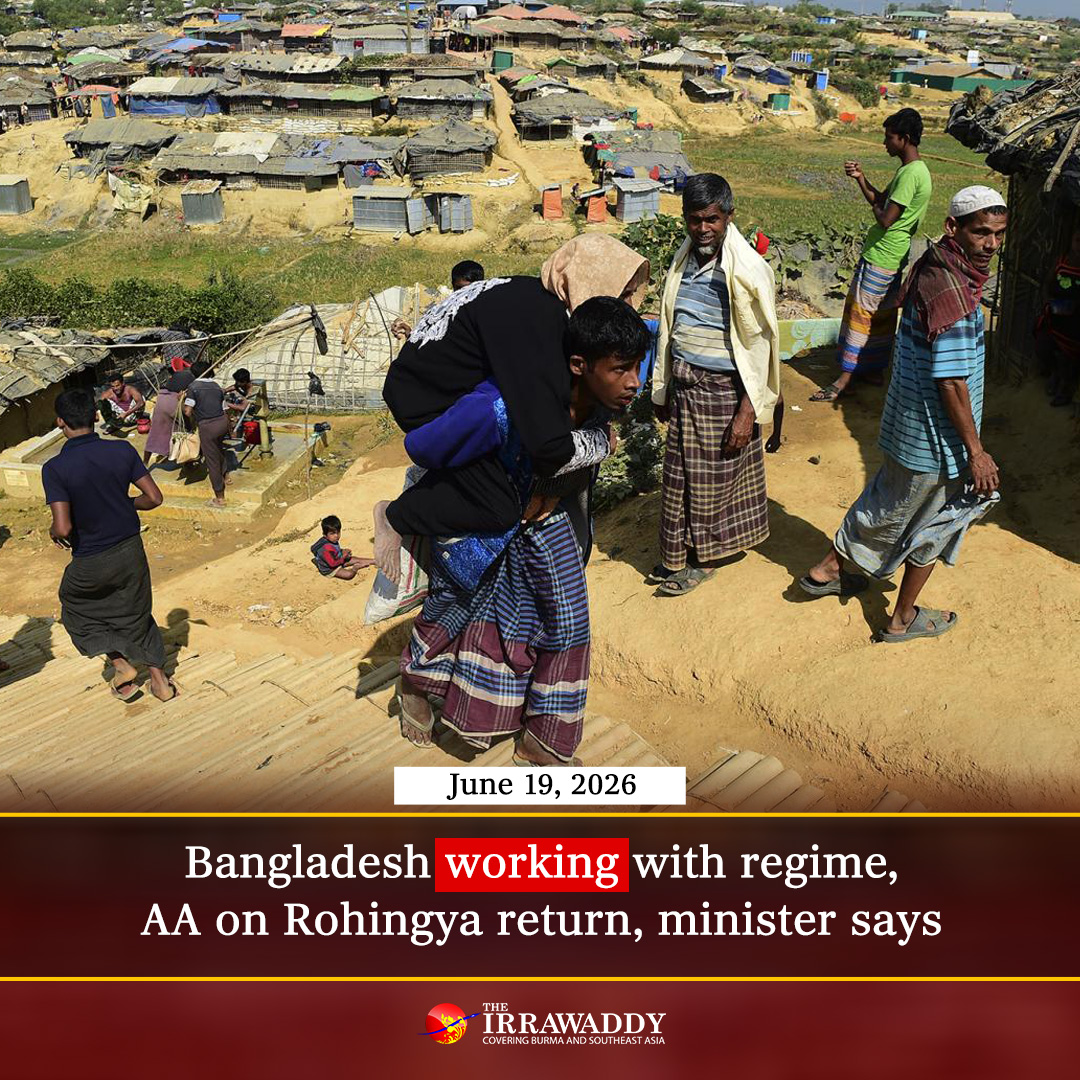
Bangladesh is set to host a major dialogue focused on justice for the Rohingya, according to Muslim Network TV’s headline.
The page frames the gathering around the Rohingya genocide, but the readable material does not provide an event date, location, organizers, participants, agenda, or intended decisions.
That makes the announcement a development to watch rather than evidence of a new accountability mechanism or policy shift.
The supplied material also contains no reported role for the National Unity Government, State Administration Council, Arakan Army, international institutions, or Rohingya representatives, and gives no information about legal proceedings, humanitarian access, or repatriation.
Any assessment of whether the dialogue could influence recognition, justice efforts, or refugee conditions therefore requires further reporting.
Key facts:
Muslim Network TV reported that Bangladesh will host a major dialogue.
The event is framed around justice for the Rohingya genocide.
The supplied page provides no date, participants, agenda, or decisions.
The article reports no roles for Myanmar’s NUG, SAC, or Arakan Army.
Why it matters: A Bangladesh-hosted forum could provide political space for discussing accountability and the Rohingya’s pursuit of justice.
Its practical significance will depend on whether organizers include Rohingya voices, clarify legal or diplomatic objectives, and produce commitments rather than discussion alone. The available article does not establish any such outcome.