Junta Resumes Rakhine Offensive; ASEAN Rejects Election Bid
The Myanmar junta's renewed military campaign in Rakhine State is driving a sharp deterioration in conditions for Rohingya civilians, even as ASEAN blocks the regime's attempts at diplomatic legitimacy. Meanwhile, Bangladesh warns that statelessness is 'by design' and the refugee crisis fuels trafficking and deadly sea crossings, while the conflict's effects reach diaspora communities in Minnesota. The tension between the junta's defiance—rejecting ASEAN's Five-Point Consensus and pursuing flawed elections—and the bloc's refusal to readmit Myanmar signals continued regional paralysis.
Friday, Jul 24, 2026
Tracking: NUG · Rohingya · Myanmar
Geography: Myanmar, Rakhine State, Bangladesh
1. Rohingya conditions worsen as junta escalates Rakhine operations
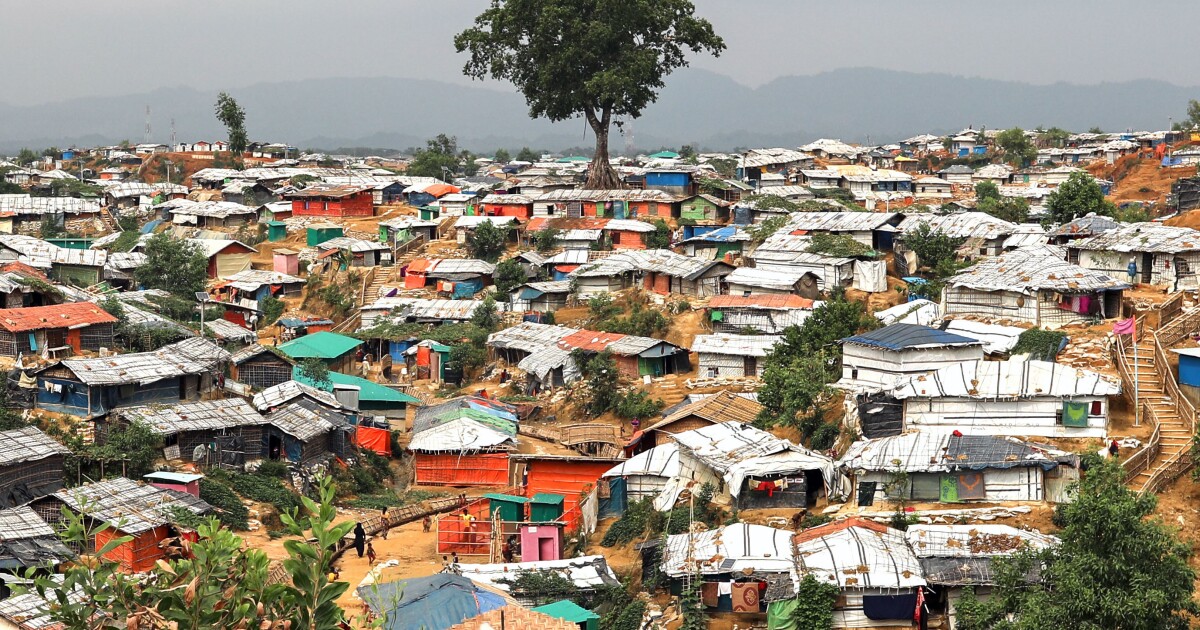
Five years after the military coup, Myanmar’s junta has resumed large-scale operations in Rakhine State, reigniting fear among Rohingya communities.
The Arakan Army has expanded its control, prompting intensified airstrikes and clashes near the Bangladesh border. Civilians face displacement, destruction of homes and farmland, and cut-off access to food, water, and healthcare.
Rohingya women and girls face heightened risks of sexual violence, and armed groups are forcibly recruiting young Rohingya.
In April 2026, a military-dominated parliament elected Min Aung Hlaing president, a figure widely held responsible for the 2017 genocidal campaign. Rohingya remain denied citizenship and equal rights.
A genocide complaint filed by a survivor in Indonesia offers a potential path to justice, drawing international attention to atrocities that Myanmar’s institutions cannot address.
Key facts:
Myanmar’s military resumed large-scale operations in Rakhine State nine years after the 2017 crackdown.
The Arakan Army has expanded control over significant parts of Rakhine, challenging the military junta.
Min Aung Hlaing was elected president in April 2026 by a military-dominated parliament.
A genocide complaint against Min Aung Hlaing was filed by a Rohingya survivor in Indonesia.
Why it matters: The renewed escalation traps Rohingya communities between the junta’s airstrikes and Arakan Army recruitment, deepening an already catastrophic humanitarian crisis.
The presidency of Min Aung Hlaing signals that the regime will shield perpetrators of past atrocities, forcing survivors to rely on foreign courts like the Indonesian genocide complaint.
This case could set a precedent for accountability but risks being stalled for years, while on the ground, denial of citizenship and basic rights leaves Rohingya with no safe future inside Myanmar or in refugee camps across Bangladesh.
2. Rohingya Death Toll Rises as Sea Crossings Intensify from Bangladesh

The humanitarian crisis among Rohingya refugees in Bangladesh is deepening as hundreds have died or gone missing over the past two years attempting dangerous sea crossings to Malaysia and Indonesia.
According to ShiaWaves, the deteriorating living conditions in the overcrowded Cox’s Bazar camps, along with restrictions on movement and employment, are driving these journeys.
Human trafficking networks continue to exploit the situation by arranging unsafe boat passages for large sums of money.
The Rohingya exodus followed a 2017 military crackdown in Myanmar’s Rakhine State, and the United Nations considers the Rohingya one of the world’s most persecuted minorities, with over one million refugees now living in the camps.
Key facts:
Hundreds of Rohingya have died or gone missing in the Andaman Sea since 2024.
Over one million Rohingya refugees live in Cox’s Bazar camps in Bangladesh.
The Rohingya exodus began after a 2017 military crackdown in Rakhine State.
Refugees face movement restrictions, poor conditions, and rising camp violence.
Thousands of Rohingya have attempted sea routes to Malaysia and Indonesia.
Why it matters: The Rohingya face a grim choice between life-threatening sea crossings and conditions that the UN deems untenable.
Bangladesh, hosting over one million refugees, continues to restrict their movement and employment, pushing more to risk the Andaman Sea’s dangerous routes.
Without a safe, dignified return to Myanmar or improved conditions in Bangladesh, the death toll from these crossings will keep rising, deepening the region’s humanitarian crisis.
3. Bangladesh urges ASEAN to push Rohingya return, calls statelessness 'by design'

Bangladesh’s Foreign Minister Khalilur Rahman told the ASEAN Regional Forum in Manila on July 23, 2026, that the prolonged Rohingya crisis has made Bangladesh a victim of cross-border crime, including drug and human trafficking.
He called statelessness 'by design' and urged regional partners to create conditions for safe repatriation to Myanmar’s Rakhine State. Bangladesh currently hosts over 1.3 million Rohingya, most of whom fled a 2017 military crackdown.
Rahman framed the crisis as a political failure demanding a political solution, and pressed ARF members for collective action to enable voluntary, dignified, and sustainable returns.
Key facts:
Foreign Minister Khalilur Rahman spoke at the 33rd ASEAN Regional Forum in Manila on July 23, 2026.
Bangladesh hosts over 1.3 million forcibly displaced Rohingya, mostly from a 2017 crackdown.
Rahman said the crisis exposed Bangladesh to drug trafficking, human trafficking, and arms flows.
He described Rohingya statelessness as 'by design' and a 'political failure demanding a political solution.'
He called for ARF support to create conditions for safe, voluntary, dignified, and sustainable repatriation.
Why it matters: Bangladesh is escalating diplomatic pressure on ASEAN, signaling that its patience with stalled repatriation is exhausted. By framing Rohingya statelessness as deliberate, Dhaka shifts blame from circumstance to Myanmar’s political and military actors.
This may push ASEAN and the UN to adopt tougher stances or sanctions, while Bangladesh risks further destabilization from cross-border crime if returns remain blocked.
Watch for whether ARF members respond with concrete repatriation timelines or new conditions on Myanmar’s junta.
4. Minnesota nonprofit aids Karenni youth as Myanmar war reaches diaspora

The Urban Village, a St. Paul nonprofit co-founded by Jesse Phenow, is providing space, resources, and community to Karenni youth displaced by the ongoing conflict in Myanmar.
The organization responds to the growing needs of refugees who have resettled in Minnesota, where the civil war's effects now extend into the diaspora.
This development highlights how Myanmar's conflict—including fighting involving the military junta, ethnic armed groups, and the National Unity Government—is creating humanitarian needs far beyond the country's borders.
The Karenni people, an ethnic group from Myanmar's Kayah State, have been among those displaced by the violence.
Key facts:
The Urban Village is a St. Paul nonprofit co-founded by Jesse Phenow.
The organization focuses on providing resources to Karenni youth.
The Karenni are displaced by the ongoing conflict in Myanmar.
Minnesota is a resettlement location for refugees from Myanmar.
Why it matters: The initiative shows that the Myanmar civil war is not solely a Southeast Asian crisis but a global humanitarian challenge that strains resettlement communities in the United States.
As the conflict persists, diaspora nonprofits like The Urban Village become critical safety nets for traumatized youth, while also signaling that international support for refugees will remain necessary for years.
The involvement of the Karenni community—a group distinct from the Rohingya—underscores the ethnic diversity of displacement from Myanmar.
5. Myanmar’s Return to ASEAN Summits Still ‘Far Off’ as Compliance Lags

Philippine Foreign Secretary Ma. Theresa Lazaro, serving as ASEAN’s special envoy, stated on July 23 that Myanmar’s readmission to top ASEAN meetings remains “far off.
” She said the bloc is still assessing Myanmar’s compliance with the Five-Point Consensus, the 2021 plan that calls for a ceasefire, humanitarian access, and inclusive dialogue.
Lazaro added that ASEAN will create benchmarks to measure progress, and failure to meet them will count as non-compliance. Meanwhile, Myanmar’s military-backed government has grown more defiant.
On July 12, Foreign Minister Tin Maung Swe met ASEAN counterparts in Bangkok, but Myanmar’s parliament recently adopted a motion rejecting the Consensus as interference.
The Ministry of Foreign Affairs also issued a statement arguing the Consensus was never properly agreed upon, citing ASEAN’s non-interference principle.
Despite Thailand’s push for reintegration, Lazaro’s comments signal that no return is likely without significant concessions.
Key facts:
ASEAN Special Envoy Lazaro said Myanmar’s return to summits is 'still far off.'
Myanmar’s parliament adopted a motion rejecting the Five-Point Consensus as interference.
Lazaro plans to lead an ASEAN mission to Myanmar later in 2026.
Thailand’s Foreign Minister Sihasak hosted a July 12 meeting on reintegration.
Myanmar claims the Consensus was 'released without reaching a consensus among all Member States.'
Why it matters: Even as Thailand and some ASEAN members push for Myanmar’s reintegration, the junta-led government is hardening its stance, rejecting the core peace plan it once agreed to.
If ASEAN enforces new compliance benchmarks, it could further isolate Myanmar’s military rulers, deepening their reliance on China and Russia.
For the National Unity Government and pro-democracy forces, this deadlock means continued diplomatic exclusion of the junta—but also no end to the blockade on humanitarian access or the civil war driving the Rohingya refugee crisis in Bangladesh.
6. ASEAN Rejects Myanmar Junta's Election Bid as NUG Gains Alternative Talks
ASEAN has rejected the Myanmar junta's bid for legitimacy after the regime’s foreign minister was excluded from a July 20-21 ASEAN meeting for refusing to implement the bloc's Five-Point Consensus.
Instead, ASEAN Special Envoy Maria Theresa Lazaro held online talks with the National Unity Government (NUG) and met leaders of the Karen National Union, Chin National Front, and Karenni National Progressive Party in Thailand.
The opposition Steering Committee for the Establishment of a Federal Democratic Union stated these discussions do not signal formal negotiations with the junta, noting that local revolutionary authorities now govern vast areas of Myanmar.
While the junta pushes for acceptance based on flawed elections held in 265 townships (65 townships excluded), neighboring states Thailand, Laos, and Cambodia are expected to continue bilateral engagement.
Junta chief Min Aung Hlaing plans a state visit to Thailand in early August.
Key facts:
Myanmar’s foreign minister was excluded from ASEAN's July 20-21 meeting after rejecting the Five-Point Consensus.
ASEAN Special Envoy held talks with NUG and three ethnic armed organizations in Pattaya, Thailand.
Junta elections were held in 265 of 330 townships; 65 townships were excluded entirely.
Opposition SCEF said talks with ASEAN do not signal formal dialogue with the junta.
Min Aung Hlaing will visit Thailand in early August, his second trip to an ASEAN country as president.
Why it matters: ASEAN’s exclusion of the junta’s foreign minister signals a potential shift toward recognizing the NUG and ethnic armed organizations as legitimate political actors.
This fractures the junta’s legitimacy campaign, which relies on flawed elections and claims of democratic mandate.
However, Thailand’s continued bilateral engagement with Min Aung Hlaing underscores the bloc’s internal divisions, limiting unified regional pressure.
The SCEF’s insistence that talks are not negotiations means formal peace processes remain stalled, while local governance shifts further away from Naypyitaw.