Fighting nears Shwe Min Gan; Malaysia offers to host Min Aung Hlaing; Bangladesh plans China-Myanmar Rohingya talks
Today’s developments show regional diplomacy trying to engage Myanmar’s authorities while the war makes conditions for Rohingya returns more precarious and politically contested. Malaysia ties a possible visit by Min Aung Hlaing to returns from Malaysia, while Bangladesh is seeking China’s involvement in renewed talks with Myanmar; both efforts face unresolved questions over safety, citizenship, security and political inclusion as fighting closes in on Shwe Min Gan.
Friday, Sep 18, 2026
Tracking: NUG · Rohingya · Myanmar
Geography: Myanmar, Rakhine State, Chin State, Sagaing Region, Bangladesh, Cox's Bazar
Fighting Near Rakhine Naval Base Escalates as Junta Launches Air Strikes
Fighting between the Arakan Army (AA) and Myanmar’s military has intensified near Shwe Min Gan naval base in Rakhine State, as junta forces use fighter jets, drones and heavy artillery.
Clashes around Yae Yoe Pyin village are the closest yet reported to the base, near the Sittwe–Ponnagyun boundary. The escalation followed an AA drone attack on troops at a monastery in Ah Myint Kyunt village.
Junta aircraft struck near Min Chaung Bridge on September 15, reportedly causing military casualties; fighting then spread toward Kyee Lay Pin, while five military columns continued “Operation 4926,” launched September 4 against AA-controlled territory in Ponnagyun.
The junta is seeking Kun Taung after establishing footholds, but analyst Captain Zin Yaw said AA tactics are straining regime defenses.
Key facts:
Fighting reached its closest point yet to the Shwe Min Gan naval base.
Junta fighter jets struck near Min Chaung Bridge on September 15.
Operation 4926 began September 4 with five military columns targeting Ponnagyun.
Clashes spread from Yae Yoe Pyin toward Kyee Lay Pin village.
Captain Zin Yaw said AA tactics are pushing regime defenses to their limits.
Why it matters: Proximity to Shwe Min Gan raises the operational stakes: fighting is moving toward a strategic military installation while the junta commits airpower and five ground columns.
If the junta secures Kun Taung, it could consolidate its footholds around Ah Myint Kyunt and Min Chaung Bridge; if AA pressure holds, Operation 4926 may fail to restore regime control in Ponnagyun.
The immediate indicator is whether clashes continue spreading toward Sittwe or the military stabilizes its positions.
Malaysia Offers to Host Myanmar President Over Rohingya Returns

Malaysia’s Prime Minister Anwar Ibrahim has offered to host Myanmar’s military-appointed president, Min Aung Hlaing, if Myanmar accepts people currently in Malaysia, including Rohingya refugees.
The proposal, announced September 16–17, pairs diplomatic engagement with refugee returns: Anwar says Malaysia wants eventual returns of up to 200,000 people, while an existing programme covers about 5,000. The first group is scheduled to leave September 29.
The Diplomat reports 1,476 people aboard two Myanmar Navy warships and a hospital ship; Al Jazeera says at least 1,500 eligible refugees will return. Malaysia hosts more than 126,000 Rohingya registered with UNHCR but does not recognize them as refugees.
Anwar says Malaysia still does not recognize Myanmar’s government, yet needs an authority to negotiate with.
For Min Aung Hlaing, the invitation could support his regional effort to regain legitimacy and improve ties with ASEAN, which has excluded Myanmar’s leaders from summits since 2021.
Key facts:
Anwar Ibrahim invited Min Aung Hlaing to Malaysia, conditional on Myanmar accepting refugees.
Malaysia agreed to a voluntary repatriation programme covering about 5,000 people.
The first returns are scheduled for September 29, 2026.
Malaysia hosts more than 126,000 Rohingya registered with UNHCR.
Anwar says Malaysia could eventually return up to 200,000 people.
Why it matters: The offer creates a direct negotiating channel for Malaysia while giving Myanmar’s military-backed leadership another opportunity to reduce its regional isolation.
It also advances a repatriation process despite Malaysia’s formal refusal to recognize Myanmar’s government and ASEAN’s continued exclusion of its leaders from summits.
Kuala Lumpur faces domestic pressure as public hostility toward Rohingya has grown, while Myanmar is pursuing wider diplomatic normalization and investment.
The immediate test is whether the September 29 returns proceed and whether Myanmar can accept additional groups safely and in stages, as Anwar proposes.
Bangladesh plans China-Myanmar talks on Rohingya return
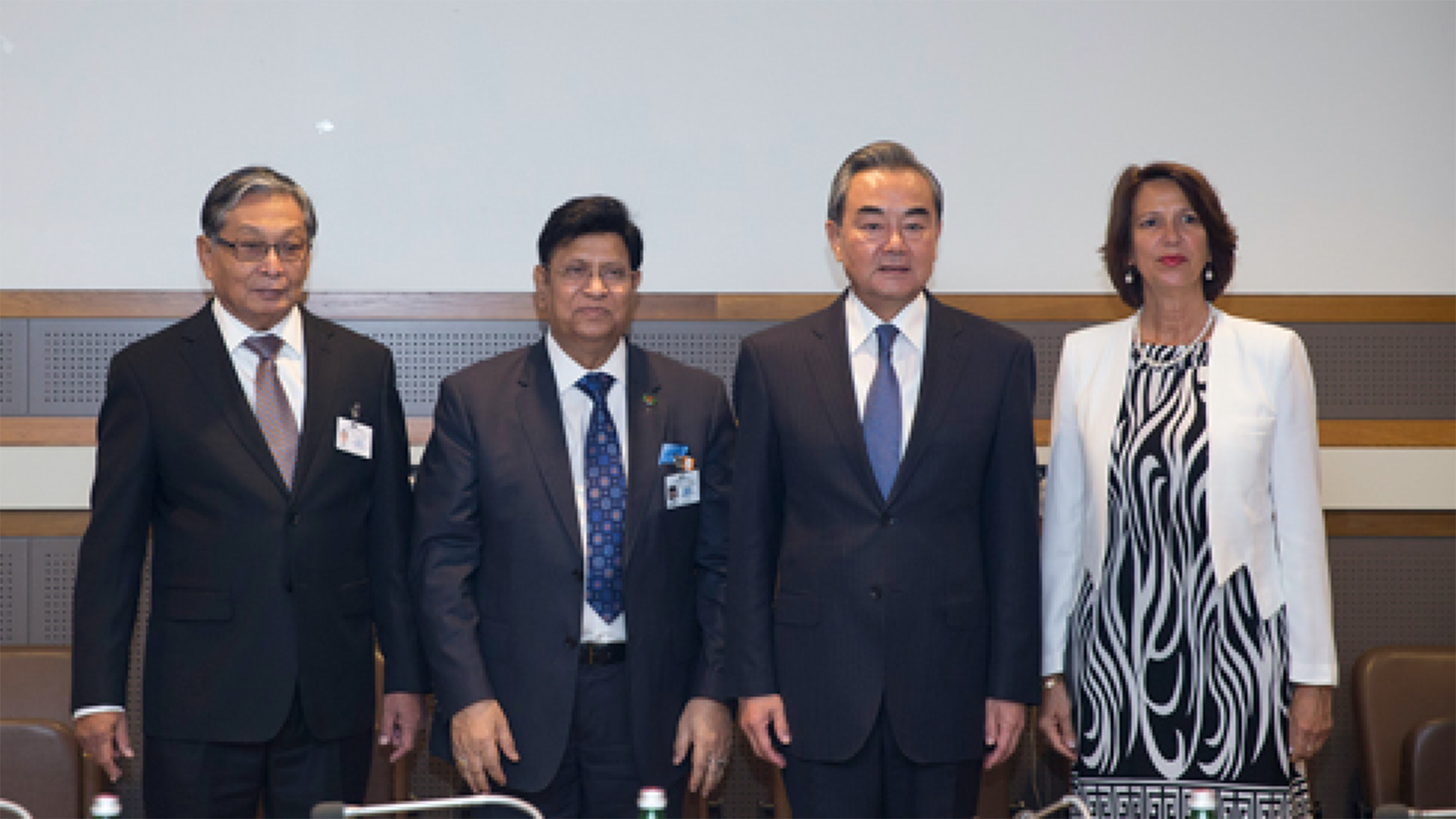
Bangladesh says it plans trilateral talks with China and Myanmar to break the Rohingya repatriation impasse after nearly a decade of displacement.
State Minister for Foreign Affairs Humaiun Kobir said only a political settlement can resolve the crisis, while Dhaka insists any return must be safe, voluntary, dignified and sustainable.
China’s access to both Dhaka and Naypyidaw, combined with economic interests in Rakhine, gives it an unusual position in the diplomacy. Yet Myanmar’s civil war has reshaped territorial control, leaving citizenship, security and political inclusion unresolved.
China helped establish a trilateral mechanism in 2019, but it produced little progress; the renewed effort also intersects with infrastructure around Kyaukphyu and a proposed Bangladesh-China-Myanmar economic corridor whose viability depends on stability in Rakhine.
Key facts:
Bangladesh announced plans this month for trilateral talks with China and Myanmar.
Dhaka says Rohingya returns must be safe, voluntary, dignified and sustainable.
China helped create a 2019 trilateral mechanism that yielded little progress.
Rakhine hosts China-linked Kyaukphyu port and pipelines to China.
Civil war has shifted territorial control, complicating citizenship, security and political inclusion.
Why it matters: The initiative gives China another opportunity to use its working relationships with Bangladesh and Myanmar, while linking Rohingya diplomacy to the security of major regional infrastructure.
Beijing also has economic incentives to stabilize Rakhine and protect connectivity projects.
The central obstacle is political rather than logistical: any durable return requires agreement on citizenship, security and inclusion in territory affected by Myanmar’s civil war.
The 2019 mechanism’s limited results suggest that announcing talks will not by itself overcome those disputes.