Malaysia backs Myanmar’s ASEAN return; China becomes its top investor and trading partner
Myanmar’s military leadership is receiving more diplomatic and economic engagement, from Malaysia’s support for an ASEAN return to China’s expanding role and Washington’s direct talks. That outreach contrasts with worsening social conditions, including poverty or vulnerability affecting 68% of the population and continued attacks on health care; readers should watch whether engagement brings practical relief or weakens pressure over abuses and accountability.
Friday, Oct 9, 2026
Tracking: NUG · Rohingya · Myanmar
Geography: Myanmar, Rakhine State, Bangladesh
Malaysia backs Myanmar’s return to ASEAN after talks with Min Aung Hlaing

Malaysia’s Prime Minister Anwar Ibrahim said on October 8 that his government would do “whatever possible” to help Myanmar rejoin ASEAN, after talks with military-backed President Min Aung Hlaing in Kuala Lumpur.
Myanmar’s leaders have been excluded from ASEAN’s high-level political meetings since the 2021 coup, which triggered an ongoing civil war, because they failed to implement the bloc’s peace plan.
The two governments also backed expanded repatriation from Malaysia: Myanmar has accepted 10,493 nationals, while Min Aung Hlaing said detainees would return “as soon as possible.
” Malaysia returned about 1,500 people in September and could deport 5,000, drawing UN and rights-group criticism; the leaders did not say whether Rohingya were included or how safety would be assured.
Key facts:
Min Aung Hlaing visited Malaysia for two days, his first visit since becoming president in April.
Anwar Ibrahim pledged to do “whatever possible” to restore Myanmar’s participation in ASEAN.
Myanmar has been excluded from ASEAN’s high-level political meetings since 2021.
Myanmar accepted 10,493 nationals for repatriation, according to Anwar Ibrahim.
Malaysia returned about 1,500 people in September; the wider program could reach 5,000.
Why it matters: The pledge gives Min Aung Hlaing a diplomatic opening as he seeks international legitimacy after an April election widely criticized by Western governments and rights groups.
It is not yet an ASEAN decision to restore Myanmar’s access to high-level meetings; Malaysia is promising to work toward reintegration while the bloc’s peace-plan condition remains unresolved.
Repatriation now links regional diplomacy to immediate protection risks.
Malaysia treats asylum-seekers as illegal migrants and has already sent people back on Myanmar naval ships; without clarity on Rohingya inclusion or safeguards, the program could intensify concerns over returns to a country where Rohingya face persecution and lack citizenship.
Calcutta High Court Questions Deportation Based Solely on Suspicion
On 8 October, Calcutta High Court Justice Saugata Bhattacharyya said authorities cannot brand someone Bangladeshi and deport them solely on suspicion.
He kept a deportation order in abeyance while hearing a petition over a Murshidabad man detained since 8 August; the case was sent to the chief justice for assignment to another bench.
The proceedings challenge a wider “detain, delete, deport” approach that critics say has targeted Bengali-speaking Muslim migrant workers in BJP-ruled states.
The court questioned reliance on neighbours’ statements to establish nationality, while the state alleged the detainee may have secured identity documents with forged papers.
Four people deported to Bangladesh returned to India in July after court orders, underscoring the consequences of mistaken removals.
Key facts:
Justice Saugata Bhattacharyya made the observations on 8 October 2026.
A Murshidabad man had been detained since 8 August over neighbours’ statements.
The deportation order was kept in abeyance and referred to the chief justice.
The state alleged the detainee might possess voter, Aadhaar, and PAN documents obtained fraudulently.
Four deportees returned to India in July following court orders.
Why it matters: The intervention places evidentiary standards and a fair opportunity to establish nationality at the center of deportation proceedings.
It could make authorities more cautious when acting on local allegations, while giving people facing removal a stronger basis to demand document checks and judicial review.
The case concerns alleged Bangladeshi migrants in India, not a ruling on Rohingya refugee status or Myanmar repatriation.
But the return of four deportees after court orders shows how nationality errors can produce prolonged cross-border displacement and diplomatic friction.
China Becomes Myanmar’s Top Investor and Trading Partner

China has become Myanmar’s largest foreign investor and trading partner as overall foreign investment continues to shrink.
In the fiscal year ending March 2026, Myanmar approved $472.6 million in foreign direct investment, down 31.5 percent year-on-year, while Chinese investment more than doubled to $201.1 million, or 42.6 percent of the total.
Singapore fell to second place with $155 million. China’s trade position also expanded: Myanmar’s exports to China rose 24.7 percent to $4.312 billion, while imports increased 42.6 percent to $5.952 billion.
The same report highlights Beijing’s security influence, including cooperation from the United Wa State Army and National Democratic Alliance Army against scam networks, and Myanmar’s October 5 announcement of 87 arrests in Hopong.
Together, the developments show China deepening economic and operational ties across territories controlled by the junta and ethnic armed organizations.
Key facts:
Myanmar approved $472.6 million in foreign direct investment during fiscal 2025.
Chinese investment reached $201.1 million, representing 42.6 percent of approved foreign investment.
China accounted for 35 percent of Myanmar’s trade, up from 27.8 percent.
UWSA authorities reportedly returned more than 1,400 Chinese nationals this year.
Myanmar reported 87 scam arrests in Hopong on October 5, including 75 Chinese nationals.
Why it matters: China is gaining weight as other investors retreat, giving Beijing greater economic leverage over Myanmar during prolonged political and armed conflict.
Chinese capital is concentrated partly in light manufacturing, while trade growth and alternative border routes connect China to areas controlled by both the junta and ethnic armed organizations.
The anti-scam campaign shows that leverage is not limited to commerce. The United Wa State Army and National Democratic Alliance Army cooperated with Chinese authorities, while arrests continued in junta-aligned territory.
This may strengthen China’s practical influence across fragmented borderlands, even as Myanmar becomes more dependent on a single major economic partner.
UNDP finds poverty or vulnerability affects 68% of Myanmar

The UN Development Program says Myanmar’s crisis has pushed more than 37 million people—68% of the population—into poverty or vulnerability. Its report, published October 8, counts almost 18 million people as poor and another 19.5 million at risk.
The nationwide survey of 7,463 households links deprivation to overlapping gaps in health, education and living standards, with health and living-standard deficits making up more than 80% of measured poverty.
Rakhine and Kayah face especially severe conditions, while the UNDP says at least one million young people may have left Myanmar since 2021 as conflict, weak services and uncertainty narrow opportunities for education, work and mobility.
Key facts:
UNDP counts almost 18 million poor people and 19.5 million vulnerable people in Myanmar.
Poverty or vulnerability affects more than 37 million people, or 68% of Myanmar’s population.
The UNDP assessment surveyed 7,463 households nationwide.
Rakhine and Kayah have especially widespread and severe poverty amid insecurity and restricted access.
At least one million young people may have left Myanmar since 2021.
Why it matters: The figures show that Myanmar’s conflict is also a nationwide human-development crisis, with deprivation extending beyond income into healthcare, housing, water, sanitation and education.
The concentration of severe poverty in Rakhine and other insecure areas highlights how fighting and restricted access can deepen hardship where public services are already fragmented.
The erosion of young people’s prospects creates a longer-term consequence: fewer workers and students remain available to support recovery.
The report also gives concrete weight to the military government’s acknowledgment that instability has slowed economic growth, while attributing the slowdown to several pressures, including sanctions, weaker trade and worker migration.
Navi Pillay Wins Nobel Peace Prize, Bringing Myanmar Genocide Case Into Focus
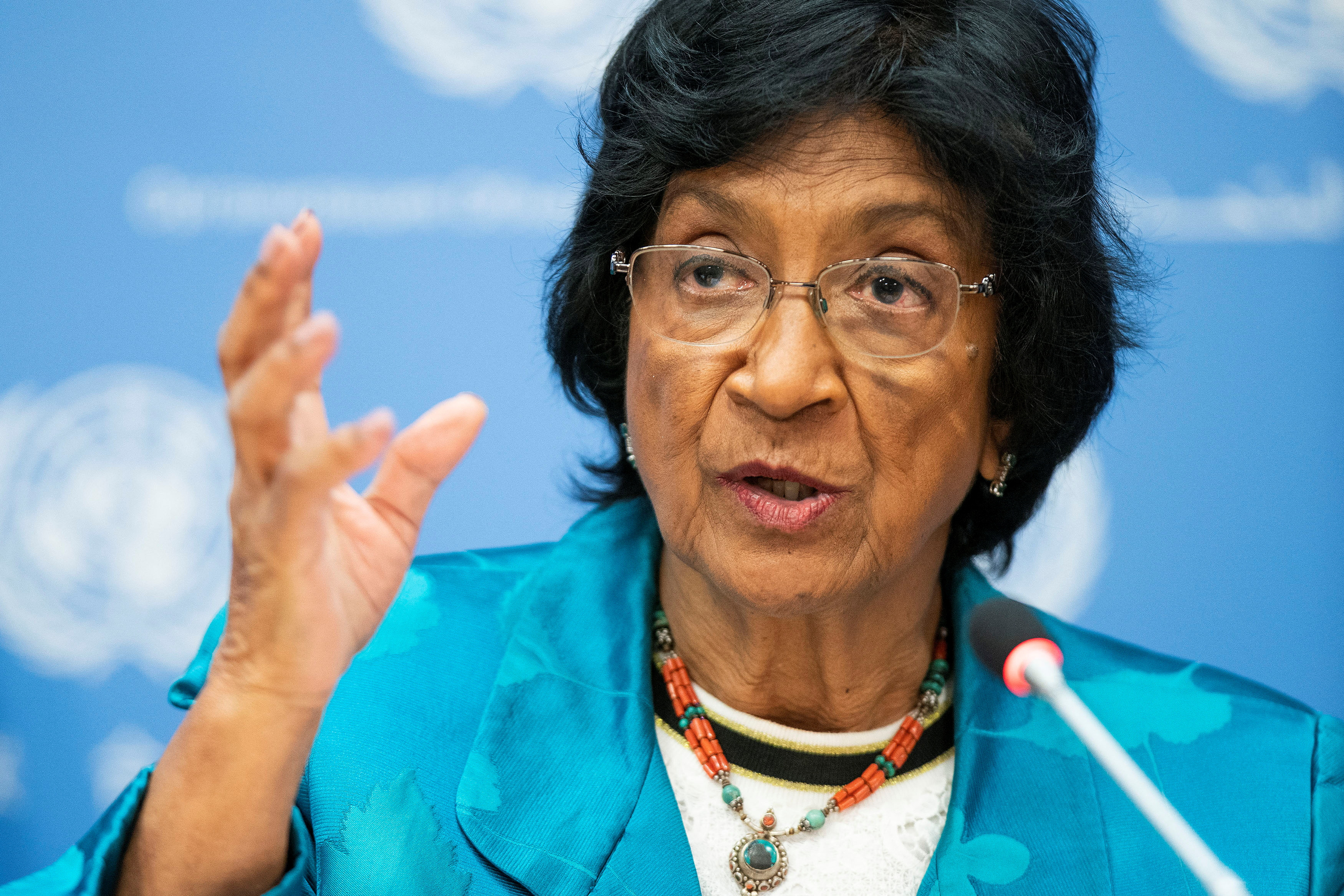
The Norwegian Nobel Committee awarded its 2026 Peace Prize on October 9 to South African jurist Navanethem “Navi” Pillay, citing her work promoting peace and international law.
The committee highlighted her role in advancing the prosecution of war crimes, crimes against humanity and genocide; Pillay said she would dedicate the award to survivors of international crimes.
Pillay currently sits on the International Court of Justice in the case in which Myanmar is accused of genocide against the Rohingya.
Her award gives international visibility to the legal process concerning Myanmar’s alleged genocide, although it brings no new ruling in the case.
The Nobel Committee also presented the prize as support for judges and international legal institutions facing pressure, rather than as a political settlement in Myanmar.
Key facts:
The Norwegian Nobel Committee announced Pillay as the 2026 Peace Prize laureate on October 9.
Pillay is 85 and previously served as UN high commissioner for human rights.
She currently sits on the ICJ in Myanmar’s genocide case concerning the Rohingya.
The prize carries 12 million Swedish crowns and will be presented December 10.
Why it matters: For Rohingya survivors and advocates, the award elevates a figure associated with international legal accountability.
It also reinforces attention to the ICJ process involving Myanmar, while producing no immediate judgment, enforcement measure or political transition.
The distinction matters for diplomacy and advocacy: the prize strengthens the symbolic standing of international-law institutions, but the case’s practical consequences will depend on future legal decisions and implementation rather than Nobel recognition.
Myanmar report documents attacks and restrictions targeting health care
On October 9, ReliefWeb published an Insecurity Insight report documenting attacks and restrictions affecting health care in Myanmar.
It records 1,973 incidents from the February 2021 coup through August 31, 2026, including 519 damaged facilities, 175 health workers killed, 940 arrested, and 55 kidnapped.
The report’s September 16–30 examples include a September 22 hospital attack in Hakha, where junta authorities blamed the Chin Defence Force after gunmen and mortars struck during a blood-donation ceremony.
It also cites a reported military ban on moving medicines and food from towns to villages in two Mandalay townships; 89% of incidents involving temporary-facility damage since January 2025 were attributed to military aircraft or drones.
Key facts:
Insecurity Insight counted 1,973 health-care violence or access-obstruction incidents through August 31, 2026.
Health facilities were damaged 519 times; 175 health workers were killed.
Temporary-facility attacks rose from four before 2025 to 33 by August 2026.
On September 22, gunmen attacked Hakha hospital during a blood-donation ceremony.
Junta authorities accused the Chin Defence Force; listed incidents lacked ground verification.
Why it matters: The findings point to pressure on both established and makeshift care. Damage to temporary facilities, combined with reported movement restrictions on medicines and food, can make it harder to keep services supplied in conflict-affected communities.
The Hakha account also highlights competing wartime narratives: junta authorities blamed the Chin Defence Force, while Insecurity Insight said its listed incidents were not verified through ground investigations.
Monitoring whether restrictions continue, attacks remain concentrated in Sagaing, Kachin and Mandalay, or attribution changes will be important for accountability and humanitarian planning.
Washington Opens Direct Talks With Myanmar’s Military Leaders
Washington has opened direct talks with Myanmar’s top generals, reversing years of U.S. isolation, according to reporting cited by CFR.
Assistant Secretary of State Michael Vance launched the talks during a Naypyidaw visit that secured a U.S. citizen’s release; U.S.
officials had reportedly also met Myanmar officials secretly in Japan. The engagement comes as Min Aung Hlaing’s military leadership remains under U.S.
sanctions and faces responsibility for mass violence, including the 2016–17 Rohingya massacres that Washington called genocide.
CFR argues the shift could confer legitimacy on the junta while doing little to secure rare-earth access, as Myanmar’s war, air attacks, and humanitarian crisis continue; Min Aung Hlaing’s visits to Thailand and Malaysia signal broader regional acceptance.
The article links the policy change to a risk that authorities will see less reason to curb abuses.
Key facts:
On October 8, Reuters reported direct U.S. talks with Myanmar’s generals after years of Washington’s isolation.
Michael Vance launched talks during a Naypyidaw visit that secured a U.S. citizen’s release.
U.S. officials reportedly held secret meetings with Myanmar officials in Japan before Vance’s visit.
Min Aung Hlaing remains under U.S. sanctions over crimes against humanity.
The United States called the military’s 2016–17 Rohingya massacres genocide.
Why it matters: Direct U.S. contact changes the junta’s diplomatic environment even without sanctions relief.
It gives Min Aung Hlaing a high-profile channel after years of isolation, while CFR warns that engagement may reduce pressure to curb abuses; the military’s recent civilian airstrikes, including a September 29 market bombing, underscore the concern.
Washington may gain a channel for narrow negotiations, but the article says rare-earth access is unlikely to justify the shift.
For Rohingya and other civilians, the downstream risk is political normalization while aid cuts, hunger, disease, and attacks continue; the next test is whether talks produce measurable changes rather than recognition alone.