Watch the Rohingya case on November 19
The International Court of Justice is scheduled to rule on November 19, 2026, in The Gambia’s case alleging that Myanmar violated the Genocide Convention. Reports from Sagaing and Rakhine also describe deadly hospital strikes and continued bombardment as displacement and barriers to aid persist.
Tracking: NUG · Rohingya · Myanmar
Geography: Myanmar, Rakhine State, Chin State, Sagaing Region, Magway Region, Bangladesh, Cox's Bazar
ICJ Sets November 19 Ruling in Myanmar Rohingya Genocide Case
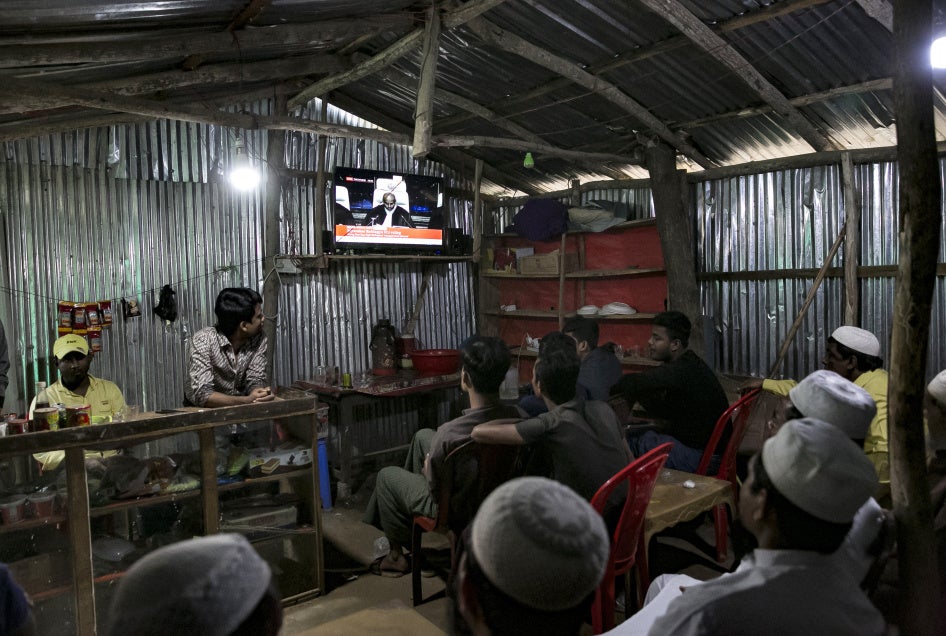
The International Court of Justice (ICJ) will deliver its judgment on November 19 on whether Myanmar violated the 1948 UN Genocide Convention in its treatment of the Rohingya, a mostly Muslim and stateless minority.
The case was brought by The Gambia in 2019, and judges have spent seven years weighing allegations tied to Myanmar’s military operations and crackdown.
More than 700,000 Rohingya fled Rakhine State for Bangladesh after the August 2017 violence, creating the world’s largest refugee settlement.
Myanmar has consistently denied genocide, saying its security forces targeted a military uprising after insurgent attacks killed 12 security personnel. The ruling will be issued at 10 a.m.
local time in The Hague; 11 states have intervened in the proceedings.
Key facts:
Why it matters: A finding that Myanmar committed genocide could increase international pressure on the military junta and provide an accountability milestone for Rohingya refugees in Bangladesh.
The ICJ has no means to enforce its decisions, so the ruling would not itself compel Myanmar to act.
Legal experts are also watching the judgment for indications of how the court might approach South Africa’s separate genocide case against Israel over the Gaza war.

AA Says Junta Bombardments Continue Across Rakhine State
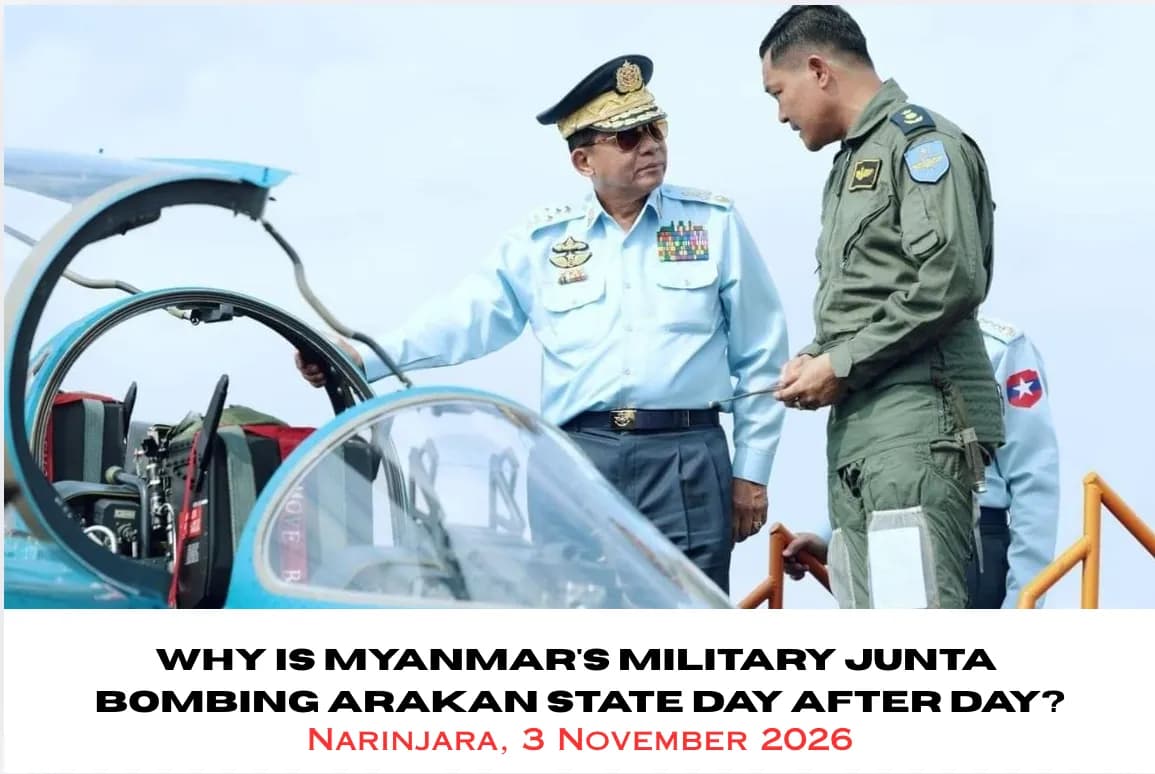
Myanmar's military junta is carrying out daily, continuous aerial bombardments across Rakhine State, according to statements released by the Arakan Army (AA) and reported by Narinjara on November 3.
The AA says the attacks are linked to what it describes as catastrophic defeats for junta forces on the ground.
The reports establish an ongoing air campaign and the AA's explanation for it, but not the bombardments' locations, targets, casualties, or independent confirmation.
A separate Development Media Group post is framed around Rakhine's border conflict and junta-backed armed groups; its readable text provides no additional confirmed details about the latest attacks.
If the AA's account is accurate, the junta is relying on air power amid battlefield losses, while the next concrete indicators are reported changes in ground control, attack locations, or civilian harm.
Key facts:
Why it matters: The AA's explanation links the junta's air operations to battlefield reverses rather than presenting them as isolated strikes.
That could indicate a widening gap between control on the ground and the junta's ability to project force from the air, but the source does not independently establish that interpretation.
For residents and humanitarian actors, the key unresolved issue is where the bombardments are occurring and whether they are causing civilian casualties or displacement. Neither supplied report provides those details.
Airstrikes hit hospitals in Sagaing and Rakhine as displacement deepens
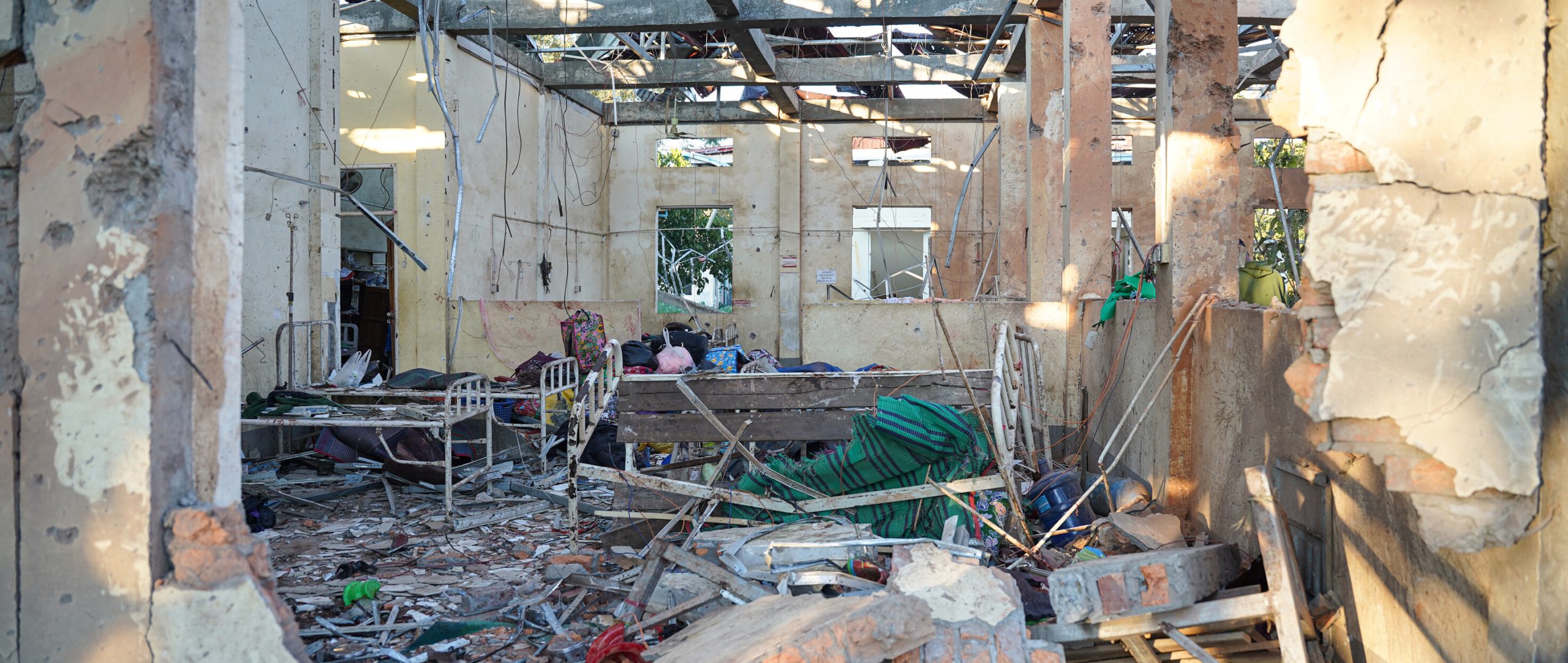
Myanmar's military reportedly struck a public hospital in Kawlin Township, Sagaing Region, on November 4, killing eight people, including CDM doctor Dr. Zar Ni Tun, and critically injuring about seven others.
Local sources said no fighting was underway; pro-military accounts claimed the hospital was linked to the NUG, while revolutionary groups warned of continued bombing around Kawlin, Wuntho and Mawlu.
In Rakhine State, the Arakan Army accused the military of bombing a maternity hospital in Mrauk-U on November 1, reporting five dead and at least nine injured.
Separately, attacks in Pauk Township reportedly killed seven civilians and displaced 3,341 residents on November 3, while other military operations pushed thousands from their homes.
Myanmar's UN ambassador Kyaw Moe Tun urged UN agencies to coordinate with the NUG, SCEF and other democratic forces to expand aid, saying military restrictions are obstructing deliveries.
Key facts:
Why it matters: The reported hospital strikes add pressure to an already restricted aid environment.
Continued attacks around Kawlin and mass flight from Pauk could leave more civilians without medical care, food, shelter and other assistance, while Kyaw Moe Tun's appeal seeks a broader delivery role for the NUG and allied democratic bodies.
In Rakhine, the AA's threat of retaliation raises the risk of further escalation after the Mrauk-U bombing.
The next developments to watch are whether airstrikes continue around resistance-held areas, whether displacement grows, and whether UN agencies establish the coordination requested by Myanmar's UN ambassador.
UNHCR Office Training Covers Protection and Humanitarian Response
On November 3, 2026, Akib Hossen said he had completed a three-day training programme at the UNHCR Office.
The post says sessions covered education, community engagement, child protection, and gender-based violence prevention, risk mitigation, response, and referrals.
It also addressed community-based protection, which emphasizes community-led identification of protection risks and sustainable solutions.
The training linked these topics to protection principles, accountability, coordination, and people-centred humanitarian programming.
Hossen said he planned to apply the learning in his professional responsibilities, particularly through Sports for Protection initiatives, and to help create safer, more inclusive environments for children, youth, and communities.
The post presents the course as professional development, not a report of a new aid operation or protection outcome, and reports no subsequent programme results.
Key facts:
Why it matters: The stated downstream use is capacity building: Hossen intends to bring training on participation, referrals, and protection-risk identification into Sports for Protection activities.
That could shape how those initiatives engage communities and respond to risks, but the post establishes an intention, not a verified change in services or safety.
***<!-- newsltr-block:%7B%22block%22%3A%7B%22id%22%3A%22date%22%2C%22type%22%3A%22date%22%2C%22content%22%3A%22long%22%2C%22prompt%22%3A%22%22%2C%22inputRequired%22%3Afalse%2C%22inputLabel%22%3A%22%22%2C%22level%22%3A2%2C%22url%22%3A%22%22%2C%22aiEnabled%22%3Afalse%2C%22sourceIds%22%3A%5B%5D%2C%22keywords%22%3A%5B%5D%2C%22sourceSearch%22%3A%22selected%22%2C%22allowAiSources%22%3Afalse%2C%22includeImages%22%3Afalse%2C%22maxHeadingLevel%22%3A3%2C%22imageSourceMode%22%3A%22auto%22%2C%22imageFit%22%3A%22contain%22%2C%22imageAspect%22%3A%22wide%22%2C%22footerCopyright%22%3A%22%22%2C%22footerDetails%22%3A%22%22%2C%22secondaryContent%22%3A%22%22%2C%22style%22%3A%7B%7D%7D%2C%22markdown%22%3A%22Friday%2C%20November%206%2C%202026%22%7D -->