AI Robotics in Medicine
PublicTracking updates in AI Robotics in the healthcare industry
Medicaroid’s hinotori wins CE Mark, challenges da Vinci in Europe
Monday, Jul 13, 2026
AI and robotics are moving from pilots to scaled deployment, spanning drug discovery and surgery.
Medicaroid’s hinotori secures CE Mark to enter Europe’s da Vinci–dominated ORs; UC San Diego demonstrates teleoperated humanoids as lower‑cost, compact surgical options; and Insilico and CMS add a second AI‑driven CNS discovery pact in three months, centered on PandaOmics and China‑focused development.
A just‑posted 30‑year review of FDA AI/ML device authorizations flags “specialty concentration” and a “care‑delivery gap,” a caution as shark‑skin‑inspired, chemical‑free surfaces and more efficient robots and sensors aim to translate lab advances into broader care settings.
Tracking: Medicine Robotics · AI Medicine · AI Healthcare
Geography: United States, European Union, United Kingdom, Germany, Israel, China, Japan, South Korea, India, Singapore, Boston, San Francisco Bay Area, London, Tel Aviv, Washington, D.C., Brussels
1. Insilico, CMS add second AI-driven CNS drug discovery collaboration

Insilico Medicine and China Medical System (CMS) announced a second AI‑empowered drug discovery collaboration in three months, this time targeting a mass‑market central nervous system (CNS) indication using a novel mechanism identified by Insilico’s PandaOmics platform.
Under the agreement, Insilico is eligible for up to approximately RMB 1. 2 billion (about $177 million) in milestone payments, plus royalties.
The partners described the relationship to date as “seamless and productive,” and will co‑develop the program.
The collaboration combines Insilico’s validated generative‑AI discovery capabilities with CMS’s clinical development systems, regulatory submission expertise, and commercialization network in China.
The program centers on PandaOmics for target identification, complementing Insilico’s broader Pharma. ai toolkit.
It follows other 2026 deals for Insilico, including a $120 million collaboration with Qilu Pharmaceutical and a $2. 75 billion research and licensing agreement with Eli Lilly.
Key facts:
- Deal worth up to RMB 1.2 billion ($177 million) in milestones plus royalties.
- Second Insilico–CMS CNS collaboration announced within three months.
- Novel CNS mechanism identified by PandaOmics underpins the new program.
Why it matters: Rapid follow‑on deals signal growing confidence in AI‑first target discovery for mass‑market CNS indications.
Insilico gains milestone‑based funding and a route from discovery to commercialization, while CMS can channel AI‑derived assets through its clinical, regulatory, and commercial reach in China.
If this program reaches clinical proof of concept, it will test whether platforms like PandaOmics can shorten the path from target discovery to therapy. Watch for disclosure of the specific indication and early development milestones.
2. Cureus publishes study on decades of FDA AI/ML device authorizations

A new Cureus paper titled “Three Decades of Food and Drug Administration Authorizations of Artificial Intelligence/Machine Learning-Enabled Medical Devices: Persistent Specialty Concentration and the Care-Delivery Gap (1995–2025)” was posted about five hours ago.
The article examines FDA authorizations of AI/ML-enabled medical devices across a 30-year span and explicitly flags “persistent specialty concentration” and a “care-delivery gap” in its title.
Full findings were not accessible in the provided view, limiting detail on methods or outcomes.
Even without the full text, the scope and framing signal a longitudinal look at where AI/ML devices have clustered by specialty and how that distribution may relate to care delivery.
If the analysis quantifies those imbalances across 1995–2025, it could offer a baseline for regulators, hospitals, and vendors to gauge whether AI/ML tools are reaching the specialties and settings where need is greatest.
Key facts:
- Cureus published a study on FDA AI/ML device authorizations spanning 1995–2025.
- The publication time provided was approximately five hours ago.
- The title flags “persistent specialty concentration” in AI/ML device authorizations.
- The title references a “care-delivery gap” related to these authorizations.
Why it matters: A longitudinal view of FDA-cleared AI/ML devices can reveal which specialties attract most innovation and which care settings are underserved.
That evidence can inform regulatory priorities, hospital procurement, and product roadmaps targeting gaps in access and impact.
Stakeholders should watch for whether the study quantifies specialty concentration, identifies underrepresented clinical areas, and suggests strategies to bridge the care-delivery gap.
3. Medicaroid’s hinotori robot wins CE Mark, enters European ORs
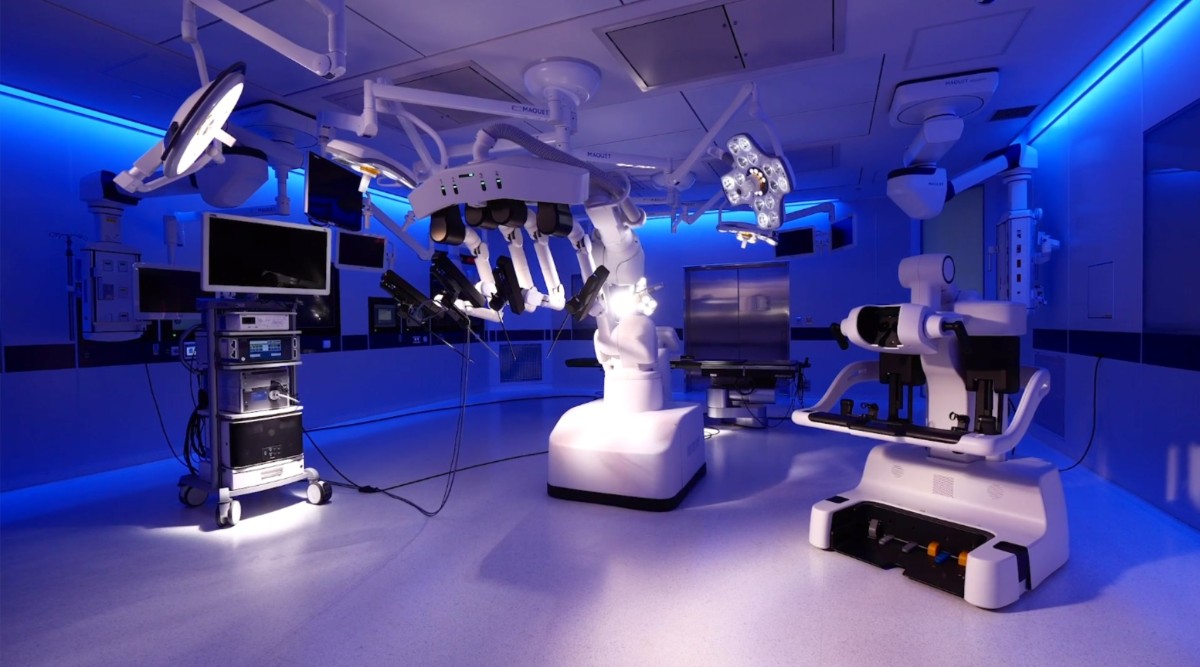
Medicaroid has secured CE Mark approval for its hinotori Surgical Robot System in Europe, clearing the way for use in operating rooms.
Developed by a Kawasaki Heavy Industries–Sysmex joint venture, hinotori’s articulated arms mimic human motion to create an open sterile workspace and support precision in tight spaces.
The system was first approved in Japan in 2020, with later clearances in Singapore, Malaysia and Vietnam, and has been used in around 15,000 procedures globally.
Medicaroid bolstered its European footprint with a German headquarters in 2020 and an innovation cluster at IRCAD in Strasbourg for surgeon training and research.
Entering a market dominated by Intuitive Surgical’s da Vinci, and contested by CMR’s Versius Plus, Medtronic’s Hugo RAS and Asensus’s Senhance, published studies report hinotori is comparable to da Vinci for certain procedures.
Key facts:
- CE Mark granted to hinotori Surgical Robot System for European use.
- Developed by Medicaroid, a Kawasaki Heavy Industries and Sysmex joint venture.
- First approved in Japan in 2020; later in Singapore, Malaysia, Vietnam.
- Around 15,000 procedures completed with hinotori globally.
- European presence includes IRCAD cluster in Strasbourg and HQ in Germany.
Why it matters: CE Mark status inserts a new, proven system into Europe’s concentrated surgical robotics market, giving hospitals more choice against entrenched incumbents.
With a training and research hub at IRCAD and prior real-world use in Asia-Pacific, Medicaroid could accelerate surgeon onboarding and compete on operating-room efficiency.
Watch for the first EU reference sites, early procedure mix across urology, general surgery, gynaecology and thoracic surgery, and how quickly Medicaroid scales service and training to match established rivals.
4. First humanoid-robot gallbladder surgery reported by UC San Diego team
Researchers at the University of California San Diego reported that a humanoid robot completed a gallbladder removal, with a second proof-of-concept in which two humanoids together performed a laparoscopic gallbladder removal.
Both operations were conducted on non-primate mammals and are detailed in Nature as “In vivo feasibility study of humanoid robots in surgery.
” The humanoids, nicknamed “Surgie,” were teleoperated by experienced surgeons; assistant professor Shanglei Liu remotely controlled the system during the procedures.
Unlike dedicated surgical platforms already used in hospitals, the team says these humanoids are significantly less expensive and occupy far less space.
That smaller, cheaper footprint could make them easier to deploy in rural settings, on battlefields, and even in space.
Senior author Michael Yip said the long-term vision is an autonomous surgical assistant, with AI-powered humanoids working alongside clinicians rather than replacing them.
Key facts:
- UC San Diego reported a humanoid completed a gallbladder removal.
- Two humanoids jointly performed a laparoscopic gallbladder removal.
- Both procedures were on non-primate mammals, not humans.
- Findings published in Nature: In vivo feasibility study of humanoid robots in surgery.
- Humanoids, nicknamed Surgie, were teleoperated by experienced surgeons.
Why it matters: If validated in human settings, humanoid surgical assistants could broaden access by lowering cost and space barriers, enabling advanced procedures in small hospitals, austere environments, and even space missions.
The approach aligns with workforce realities by aiming to augment, not replace, surgical teams, potentially easing staffing gaps.
What to watch: progress toward partial autonomy for routine tasks, evidence of safety and reliability beyond animal models, and whether portability and price advantages persist as capabilities expand.
5. Shark biomimicry drives advances in hospital surfaces, robotics, sensors

Scientists are increasingly turning to sharks for design cues, a strategy known as biomimicry.
The article explains how shark skin’s microscopic, tooth-like denticles reduce drag, informing research on swimsuits and ship coatings that can lower resistance and save fuel over long journeys.
It frames sharks’ 400-million-year evolutionary track record as a rich playbook for solving modern engineering problems. Healthcare and robotics are also tapping these insights.
Shark-skin-inspired surface patterns are being applied to hospital equipment and other surfaces to discourage bacterial growth without chemicals.
Engineers are borrowing shark swimming mechanics to build more stable, energy-efficient underwater robots, while the shark’s electroreception via the ampullae of Lorenzini is informing next-generation underwater sensors.
The piece situates shark-driven ideas within broader biomimicry, alongside lessons from lotus leaves, kingfishers, and geckos.
Key facts:
- Sharks have existed for more than 400 million years.
- Shark skin has microscopic dermal denticles that reduce drag in water.
- Researchers developed ship coatings inspired by shark skin to cut resistance.
- Shark-skin patterns are used on hospital surfaces to discourage bacterial growth.
- Shark electroreception (ampullae of Lorenzini) informs improved underwater sensors.
Why it matters: Biomimicry offers low-complexity routes to performance gains. In hospitals, patterned surfaces could reduce bacterial settlement without relying solely on chemicals, aiding infection control and potentially lowering costs.
In marine robotics and sensing, shark-inspired motion and electroreception research point to more efficient vehicles and more precise navigation and detection.
These nature-derived approaches can complement traditional engineering by delivering efficiency, reliability, and sustainability improvements without adding unnecessary parts.