AI Robotics in Medicine
PublicTracking updates in AI Robotics in the healthcare industry
Microsoft pivots in-house AI to curb OpenAI, Anthropic costs
Sunday, Jul 12, 2026
Two moves point to capability-building across the AI stack: Microsoft is reevaluating reliance on third‑party frontier models to rein in OpenAI and Anthropic spend, while Malaysia’s UKM and BlackBerry QNX launch ASEAN’s first real‑time OS course to train engineers for deterministic, safety‑critical systems.
Together they underscore a shift toward tighter control over costs, reliability, and talent—watch for impacts on model vendors’ bargaining power, enterprise AI cost profiles, and the embedded AI workforce feeding autonomous vehicles, factory robots, and medical devices.
Tracking: Medicine Robotics · AI Medicine · AI Healthcare
Geography: United States, European Union, United Kingdom, Germany, France, Switzerland, Israel, Canada, Japan, South Korea, China, Singapore, India, Australia, Boston, San Francisco Bay Area, New York, Houston, London, Cambridge (UK), Oxford, Paris, Berlin, Munich, Zurich, Basel, Tel Aviv, Toronto, Montreal, Vancouver, Tokyo, Seoul, Beijing, Shanghai, Shenzhen, Singapore, Bengaluru, Hyderabad
1. UKM, BlackBerry QNX launch ASEAN’s first real-time OS university course

Malaysia’s push into semiconductors, robotics and smart manufacturing is exposing a skills gap in deterministic, safety‑critical software.
To address it, Universiti Kebangsaan Malaysia has introduced a final‑year Real‑Time Operating Systems elective developed with BlackBerry QNX—the first university program in ASEAN to incorporate QNX.
BlackBerry’s Raj Jain said embedded AI systems must “respond predictably and reliably every single time.
” The focus is on real-time computing essential where even fractional delays can affect safety, from autonomous vehicles and factory robots to medical equipment.
The three‑credit course, for fourth‑year electrical and electronic engineering students, builds on embedded systems study and provides hands‑on QNX development.
The inaugural intake will be around 60 students, who will complete months of practical training and an industry‑style hackathon. UKM lecturers will teach, supported by a BlackBerry train‑the‑trainer program.
UKM’s vice-chancellor said the goal is job‑ready graduates with practical embedded and real‑time skills.
Key facts:
- UKM introduced a three-credit Real-Time Operating Systems elective for fourth-year engineering students.
- Developed with BlackBerry QNX, it is ASEAN’s first university program to incorporate QNX.
- The inaugural intake will comprise about 60 students with months of practical training.
- Teaching by UKM lecturers is supported by a BlackBerry train-the-trainer program.
- Students will participate in an industry-style hackathon.
Why it matters: Real-time engineering talent is a bottleneck as AI moves from the cloud into regulated, safety‑critical machines.
By seeding hands‑on QNX skills in graduates, UKM and BlackBerry are building a pipeline for employers across automotive, industrial automation and medical equipment in Malaysia and ASEAN.
Watch for enrollment scaling, industry placements, and whether other universities adopt vendor-supported RTOS curricula to meet rising demand for deterministic computing.
2. Microsoft pursues in-house AI to curb OpenAI and Anthropic spending
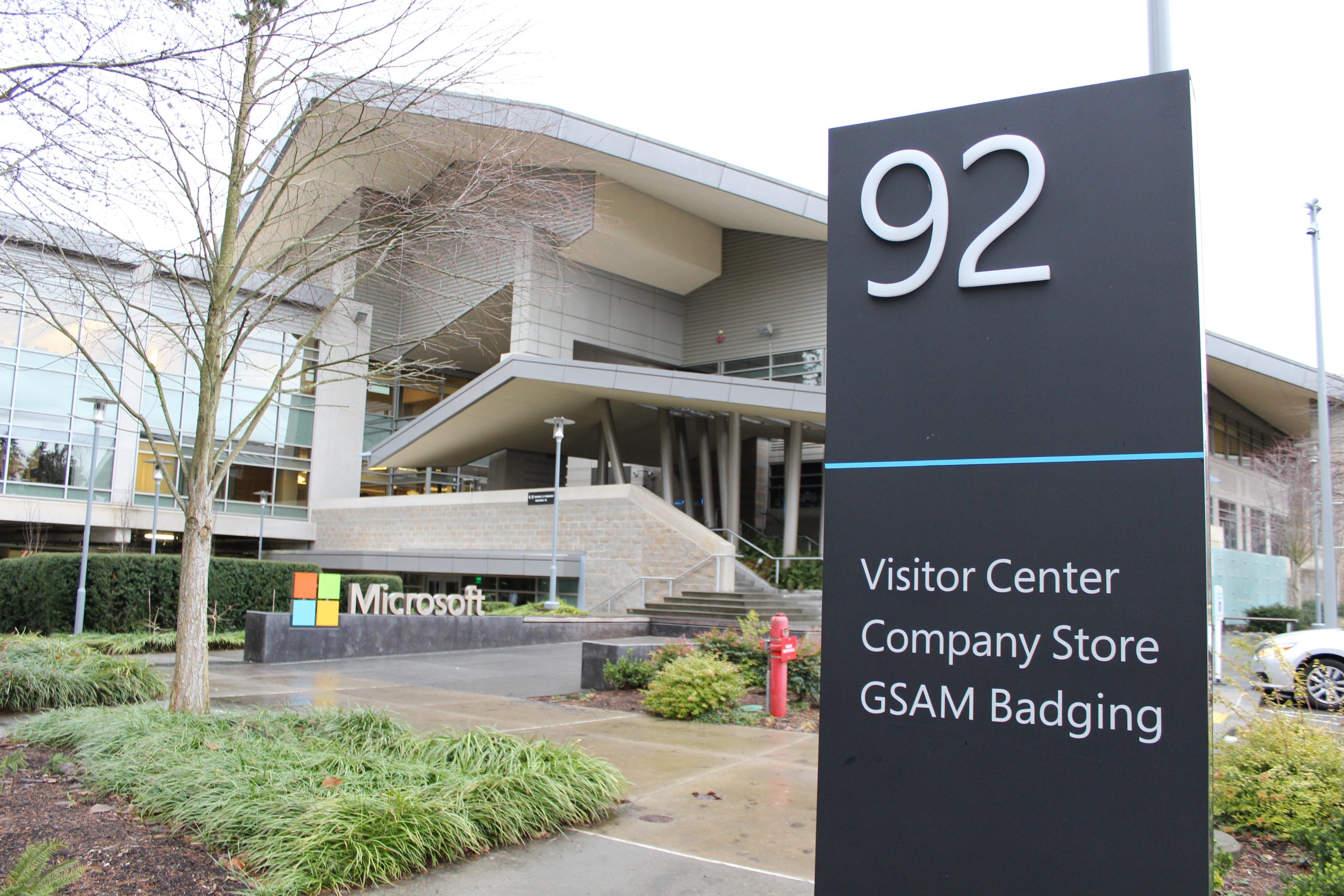
MarketBeat’s July 12 note on artificial intelligence stocks flags a strategic shift at Microsoft, highlighting that the company “bets on in-house AI to cut OpenAI and Anthropic costs.
” While presented within an investor roundup, the framing points to a concrete move to rebalance Microsoft’s model-sourcing mix away from external partners toward internal capabilities.
Details are sparse beyond the cost-cutting intent, but the signal is clear: Microsoft is evaluating how much to rely on third-party frontier models versus building and running more of its own.
That calculus matters for near-term expense control and long-term bargaining power with model providers.
It also telegraphs potential ripple effects for investors tracking AI infrastructure, model vendors, and downstream enterprise users sensitive to inference and training costs.
Key facts:
- MarketBeat published an AI stocks roundup on July 12.
- It states: “Microsoft bets on in-house AI to cut OpenAI and Anthropic costs.”
- Microsoft, OpenAI, and Anthropic are named in the cost-shift context.
- No specific financial figures or timelines were disclosed in the article.
Why it matters: If Microsoft leans further into internal models, it could pressure model providers on pricing and contract terms, reshaping the economics of foundation model access.
A lower external cost base can translate into more competitive pricing or margin protection for Microsoft’s AI offerings, influencing enterprise adoption where AI cost-per-use is a gating factor.
For investors, partner-dependence risk becomes a more prominent valuation lens across the AI stack.
Watch for follow-on disclosures: the scope of Microsoft’s in-house model roadmap, any renegotiations with OpenAI or Anthropic, and indications of cost-per-inference trends that could cascade to customers in regulated industries.