Data Centres
PublicTracking the latest news on data centres.
napasthein@gmail.com
APAC Tightens Data‑Centre Grid Access Rules
Thursday, Jun 11, 2026
Regulatory and resource constraints are colliding with a rapid AI-driven data‑centre buildout: APAC regulators are rewriting grid‑access rules to require battery storage, curtailment management and grid support even as studies and IEA data highlight rising local temperatures, power use and water demands.
Watch how industry responses—Microsoft’s new San Jose campus, Wesco’s acquisition of cooling specialist Newark, Meta’s $115M technician bootcamp—play out against supply risks (indium phosphide), higher project costs and mounting local resistance from moratoria in Charlotte to protests at Fisk.
Tracking: Data Center · Data Centre
Geography: Northern Virginia (US), Silicon Valley / Bay Area (US), Dallas / Texas (US), Chicago (US), New York / metro area (US), Phoenix (US), Amsterdam (Netherlands), Frankfurt (Germany), London (UK), Dublin (Ireland), Paris (France), Singapore, Tokyo (Japan), Sydney (Australia), Mumbai / Pune (India), São Paulo (Brazil), Dubai / UAE, Scandinavia (Nordic markets)
1. APAC regulators tighten data-centre grid access rules
Wood Mackenzie finds more than 32 GW of planned data‑centre capacity across over 1,150 projects is forcing Asia‑Pacific regulators to rewrite grid access rules.
Operators now face rising costs, curtailment risk and stricter clean‑energy requirements as they are increasingly required to provide battery storage, manage curtailment and support grid stability to secure constrained network connections.
Policymakers are shifting responsibility away from a utilities‑only model toward four new frameworks: conditional access, geographic diversification, grid‑support requirements and capacity controls.
Markets such as Japan may allow early grid connection if operators install load‑shedding, battery storage or similar controls — a tradeoff that “can accelerate access to power, also increase project costs and operational complexity,” and, as Xiaonan Feng notes, makes securing power often harder than land, finance or permits.
Key facts:
- More than 32 GW of planned APAC data‑centre capacity
- Over 1,150 planned data‑centre projects across Asia‑Pacific
- Wood Mackenzie report: Asia‑Pacific power grids are redefining data‑centre access
- Regulatory measures grouped into four categories of requirements
- Japan explores conditional access with load‑shedding and battery mandates
Why it matters: Developers will face higher upfront costs, operational complexity and new contractual obligations to secure power, slowing some projects and reshaping site selection.
Vendors of batteries, grid‑support systems and flexibility services stand to gain, while regulators and grid operators get new tools to manage constrained networks; watch for evolving policy details, capacity controls and geographic steering that will determine which regions attract future data‑centre investment.
2. Microsoft breaks ground on San Jose data center
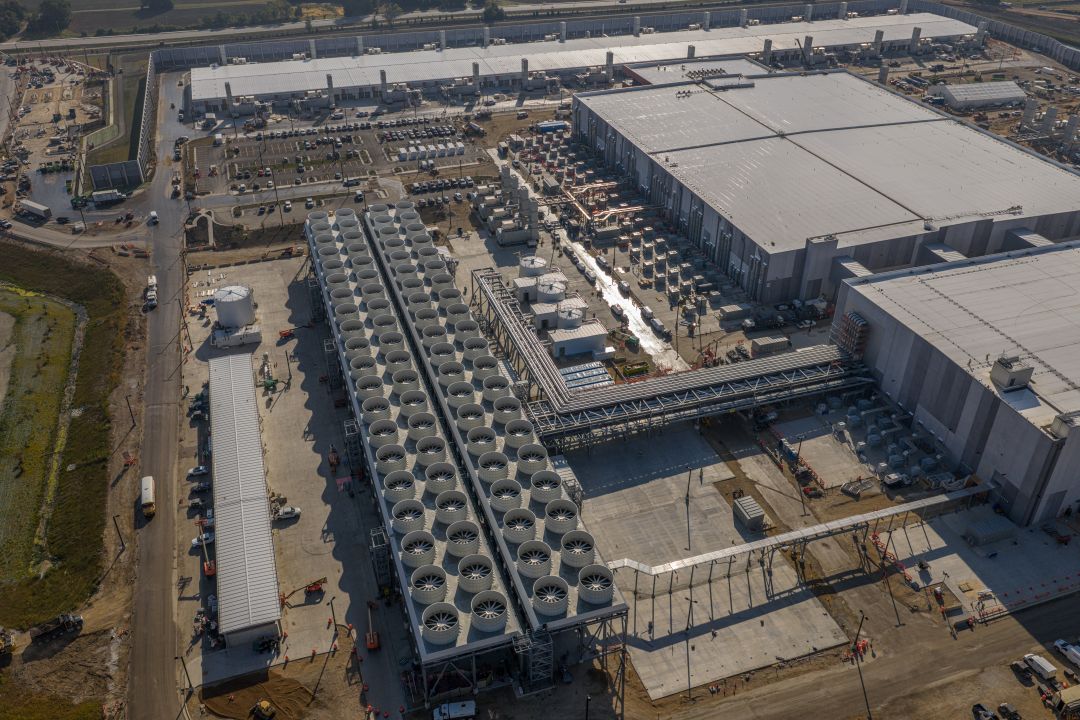
Microsoft broke ground Wednesday on a 48-megawatt data center campus in San Jose's Alviso neighborhood, a project city leaders say will support growing demand for cloud computing and artificial intelligence.
Jonathan Noble, Microsoft's senior director of government affairs, said the site will be Microsoft’s first purpose-built, company-owned and operated data center in San Jose.
HITT Contracting senior vice president John Kane said construction will employ more than 600 workers at peak and finish in about 18 months.
Mayor Matt Mahan said the facility will support more than 100 ongoing jobs and called data centers "critical infrastructure" for services including hospitals, transportation and 911; city officials said the project will use 100% recycled water for cooling, renewable energy, and can supply power back to the grid during high demand.
Key facts:
- Project: 48-megawatt data center campus in San Jose's Alviso neighborhood
- Microsoft: first purpose-built, company-owned data center in San Jose
- Timeline: construction expected to complete in about 18 months
- Construction jobs: more than 600 workers at peak
- Operational jobs: more than 100 ongoing positions once operational
Why it matters: City leaders frame the build as local infrastructure to meet rising cloud and AI demand and to sustain essential digital services such as hospitals and 911 systems.
The project delivers near-term construction employment and longer-term operations jobs while testing recycled-water cooling and grid feed-in as sustainability measures.
Watch the 18-month delivery timeline, renewable energy sourcing, and how the facility’s grid-feed capability and recycled-water system perform in operation; those factors will shape municipal benefits, community reception, and potential templates for future data center projects.
3. AI data centres increase heat and energy demand, exposing regional and supply gaps
A Cambridge-led study finds land surface temperatures around AI data centres rise about 2°C on average, up to 9°C in some places, as hyperscale facilities run powerful chips and dense cooling systems.
The International Energy Agency says data centres used roughly 415 TWh in 2024 (about 1.
5% of global electricity), with demand growing ~15% annually and projections to 945 TWh by 2030; hyperscale sites commonly draw 100–300 MW and can consume billions of litres of water annually.
Commercial real estate research shows the Americas are pulling sharply ahead on build pipelines — planned capacity around 260 GW versus 26 GW for EMEA — while EMEA growth is limited by power availability, permitting, supply-chain and regulatory complexity.
Reuters also reports a fresh supply risk: Nvidia-backed Coherent warned of indium phosphide shortages, and China's export controls could further threaten AI hardware rollout.
Key facts:
- Cambridge study: average 2°C land-surface warming near AI data centres
- Maximum local temperature rise recorded up to 9°C in the study
- IEA: data centres consumed ~415 TWh in 2024, ~1.5% global electricity
- IEA projection: 945 TWh data centre consumption by 2030
- Hyperscale facilities typically draw 100–300 megawatts
Why it matters: Operators, hyperscalers, and investors face intersecting risks: local environmental impacts (heat and water), constrained grid capacity, and rising execution costs where permitting and power are tight.
The Americas’ rapid pipeline advantage favors faster hyperscale campus builds and lower immediate delivery risk, while EMEA markets will see higher development friction and potential price pressure.
Supply-side shocks — such as reported indium phosphide shortages and export controls — can bottleneck specialized hardware and slow deployments worldwide.
Watch factors: regional power pricing and permitting timelines, corporate PPA and BESS adoption, cooling-water and thermal-management choices, and semiconductor export policy developments.
4. Charlotte enacts 150-day data center development moratorium
Charlotte's City Council unanimously approved a 150-day moratorium on new data center development Monday night, in a packed meeting that mirrored similar local actions across North Carolina.
Dozens of local governments have enacted temporary pauses in the past six months so officials can update planning ordinances that, leaders say, are not equipped for modern data centers.
Residents and local officials have raised concerns about the facilities' heavy electricity and water use to cool equipment amid a rapid, AI-driven surge in demand.
North Carolina already hosts at least 93 operating data centers, and more than 20 new projects have been announced since the start of 2025.
Two planned Charlotte projects, including one by Boston-based American Tower, spurred a neighborhood campaign by PSL Charlotte that organizers say found many residents unaware of the developments.
Key facts:
- Charlotte approved a 150-day data center moratorium Monday night
- City Council vote was unanimous and held before a packed house
- Dozens of North Carolina local governments passed moratoriums in six months
- Officials say planning ordinances are not equipped for modern data centers
- Data centers consume large amounts of electricity and water for cooling
Why it matters: The moratoriums shift leverage to local governments and communities, forcing developers and utilities to meet updated zoning, permitting and resource-siting standards and potentially delaying projects.
Watch for revised local ordinances, expanded community notification rules, and similar pauses in other jurisdictions as officials weigh electricity, water and land‑use impacts against economic development claims.
5. Wesco to Acquire Singapore Cooling Specialist Newark Engineering Group
Wesco International has entered into a definitive agreement to acquire Singapore-based Newark Engineering Group, a specialist in engineered cooling solutions and lifecycle services for data centres.
Newark designs, supplies, installs, commissions and maintains thermal management systems used in mission-critical environments.
Wesco's chairman, president and CEO John Engel said Newark provides "integrated, turnkey cooling solutions" and serves a blue-chip customer base including global technology and Fortune 500 companies.
Wesco expects the acquisition to enhance its growth profile, support margin expansion and generate attractive returns within the first year; the move underscores rising industry focus on thermal management as facilities handle denser, higher-workload infrastructure.
Key facts:
- Wesco International entered a definitive agreement to acquire Newark Engineering Group
- Newark Engineering Group is Singapore-based
- Newark specialises in engineered cooling and lifecycle services for data centres
- Newark provides design, supply, installation, commissioning and maintenance
- John Engel is Wesco's Chairman, President and Chief Executive Officer
Why it matters: The acquisition gives Wesco specialist thermal-management capabilities and a Southeast Asia platform, positioning it to sell higher-margin, service-led cooling solutions as data centres grow more power-dense.
Monitor integration execution, margin expansion and the firm's claim of "attractive returns within the first year," since operators increasingly need lifecycle cooling services to support reliability and efficiency.
6. Meta pledges $115M for Indianapolis data-center technician bootcamp
Meta pledged $115 million to create a paid bootcamp in Indianapolis to train technicians for data center and fiber installation, calling the program America’s Workforce Academy.
Trainees will receive paid airfare, lodging, a daily stipend, free tuition and a guaranteed job with a Meta contractor after completing the five-week program.
The company is piloting the program in Indianapolis, Baton Rouge, Houston and Columbus, Ohio, aiming to train thousands to build AI infrastructure.
Meta noted it recently broke ground on a $10 billion Lebanon data center, is finishing construction in Jeffersonville, expects training to begin later this year, and is working with the Boone County Economic Development Corporation and the Associated Builders and Contractors to recruit trainees; U.S. Sen. Todd Young applauded the move.
Key facts:
- $115 million pledged by Meta for the bootcamp
- Bootcamp named America’s Workforce Academy
- Five-week paid training program with a job guarantee
- Program covers airfare, lodging, daily stipend, and free tuition
- Pilots in Indianapolis, Baton Rouge, Houston, and Columbus, Ohio
Why it matters: Meta is investing directly in the skilled trades that build data centers and fiber for AI, which could ease the labor bottleneck for its Lebanon $10 billion data center and other regional projects.
Watch whether the program scales to place thousands of trainees with Meta contractors, the quality and scope of technical credentials awarded, and how local labor markets and training providers respond as hiring and construction ramp up.
7. Fisk alumni protest proposed HBCU campus data center
Rep. Justin Jones (D-Nashville) joined Fisk alumni and North Nashville community members Wednesday morning to oppose construction of a proposed data center on the HBCU’s campus.
The plan, and a more widely protested data center proposed next to the Nashville Zoo, will both be discussed at a Planning Commission meeting at 4 p. m.
Thursday; Jones urged residents to oppose the North Nashville project, saying, “If AI data centers are not good for a zoo, then it’s not good for an HBCU.
” Separately, Metro Nashville and the Metro Nashville Airport Authority are suing the state of Tennessee over its latest attempt to take control of the authority that oversees Nashville International Airport.
A 2023 effort remains held up in court after lower courts ruled it illegally targeted only Metro Nashville; Tennessee’s new law takes control of several big-city airport authorities and goes into effect July 1, and Metro argues federal law requires the controlling entity approve any transfer of control.
Key facts:
- Rep. Justin Jones joined Fisk alumni opposing a proposed data center on Fisk's campus.
- Planning Commission meeting scheduled for 4 p.m. Thursday to review both data center proposals.
- A data center proposed next to the Nashville Zoo has drawn wider public protests.
- Metro Nashville and the Metro Nashville Airport Authority sued the state of Tennessee.
- A 2023 attempt to take airport control remains held up in court.
Why it matters: Local mobilization against the HBCU campus proposal signals community influence over land-use and tech infrastructure siting; the Planning Commission decision will be decisive for both projects.
The airport lawsuit elevates state-versus-local governance and legal questions about who may lawfully assume control of major infrastructure; with the new law effective July 1, court outcomes and any federal-law determinations will shape who governs Nashville International Airport and when.
Watch the Planning Commission hearing and the ongoing litigation for near-term resolution.