AI Robotics in Medicine
PublicTracking updates in AI Robotics in the healthcare industry
Mayo Summit: Healthcare AI shifts to decision intelligence
Monday, Jun 29, 2026
Mayo Clinic’s June 4–5 AI Research Summit signaled a shift from standalone prediction to decision intelligence that guides next clinical steps and bridges care and research.
The program spotlighted multi-agent AI and real-world-data simulations powering point-of-care decisions (e.g., optimizing antiplatelet timing after stents) and research workflows like drug-repurposing prioritization and “virtual trials” that surface early signals.
Also in view: models to flag pancreatic cancer early from routine scans and growing use of ambient tools to capture clinical data—watch for how quickly these are woven into routine workflows.
Tracking: Medicine Robotics · AI Medicine · AI Healthcare
Geography: United States, European Union, United Kingdom, Germany, France, Switzerland, Israel, Canada, Australia, China, Japan, South Korea, India, Singapore, United Arab Emirates, Saudi Arabia, Boston, San Francisco Bay Area, Minneapolis–Saint Paul, Houston, London, Cambridge (UK), Paris, Berlin, Munich, Zurich, Tel Aviv, Toronto, Montreal, Vancouver, Beijing, Shanghai, Shenzhen, Tokyo, Seoul, Bengaluru, Singapore (city-state)
1. Mayo Clinic summit spotlights shift to decision intelligence in healthcare AI
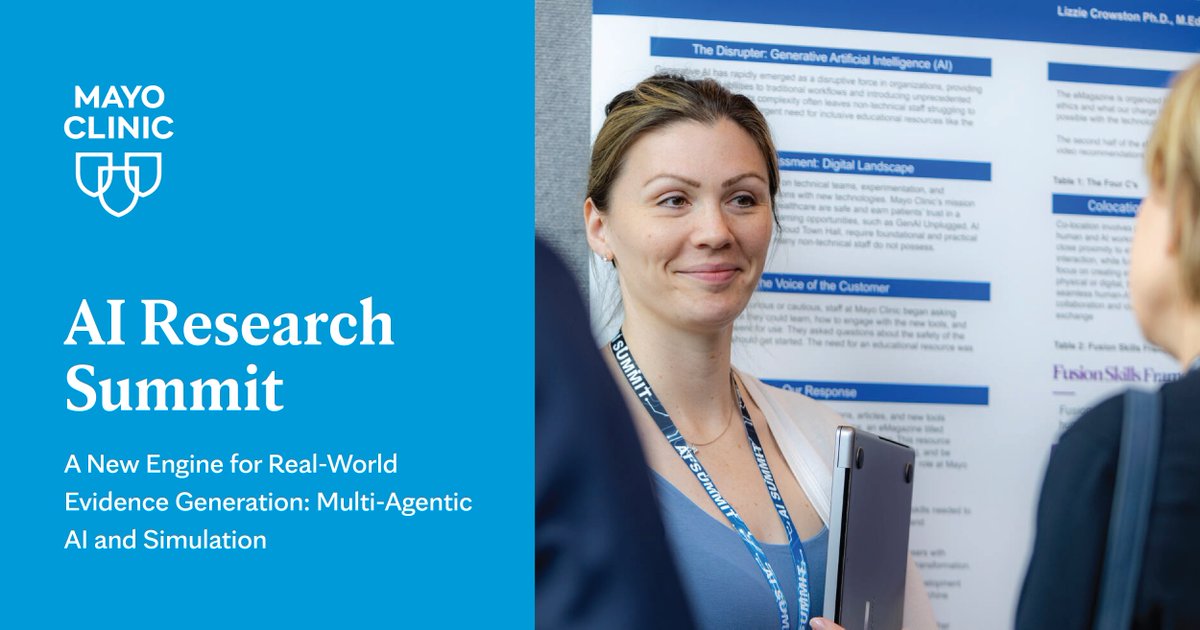
Mayo Clinic’s AI Research Summit convened more than 750 researchers, clinicians, engineers and students on June 4–5 in Rochester, Minnesota.
Speakers emphasized a pivot from building predictive models to developing integrated decision intelligence systems that guide next clinical steps.
The program spotlighted multi-agentic AI and simulations using real-world data to test ideas and accelerate insight generation. Presenters outlined point-of-care decision support, such as optimizing antiplatelet therapy timing after stent placement.
They also described research uses, including multi-source analyses to prioritize drug-repurposing candidates and “virtual trials” that simulate studies from existing healthcare data to surface early signals.
Additional examples included AI models that flag pancreatic cancer early from routine abdominal scans and the growing adoption of ambient tools that capture clinical data.
Key facts:
- The summit ran June 4–5 in Rochester, Minnesota.
- More than 750 participants joined in person and online.
- Cui Tao urged building integrated decision intelligence systems.
- The agenda highlighted multi-agentic AI collaborations.
- Simulations with real-world data were featured for faster insights.
Why it matters: Shifting from prediction to decision intelligence moves AI closer to daily clinical choices—what to do next, when, and for whom—promising more personalized, timely care.
If realized, tools that optimize therapy timing (e.g., after stent placement) could reduce complications and standardize high‑stakes decisions.
On the research side, multi-agent analyses and virtual trials could triage drug‑repurposing ideas faster, potentially shortening time to identify promising therapies.
Broad use of ambient data‑capture signals AI’s integration into routine workflows, raising the bar for systems that are reliable, explainable, and seamlessly embedded at the point of care.