Hantavirus outbreak ends: 13 cases, 3 deaths
The hantavirus outbreak linked to the MV Hondius cruise ship has officially concluded with 13 cases and three deaths, after all exposed individuals completed quarantine without wider community spread. While media attention and a Moderna stock surge have amplified public concern, physician surveys and CDC data underscore that the overall risk to the general public remains low and that the virus requires prolonged close contact to transmit. The key takeaway is the successful containment of a rare person-to-person hantavirus event, with no travel advisories issued and all monitored Americans remaining healthy.
Wednesday, Jul 1, 2026
Tracking: hantavirus
Geography: Southwestern United States, South America, China, Korea, Europe
1. Self-isolation ends for all exposed in hantavirus cruise ship outbreak

The Public Health Agency of Canada declared on June 30 that self-isolation has ended for everyone exposed to the Andes hantavirus outbreak linked to the MV Hondius cruise ship.
A Yukon woman in her 70s who tested positive has recovered and was discharged from hospital in early June. Four people had isolated on Vancouver Island, with five others monitored in Ontario and Alberta.
The outbreak, which began in April, infected 13 people and caused three deaths. Hantavirus infections carry a 30 to 50 percent fatality rate.
PHAC assessed the overall risk to the general Canadian population as low.
Key facts:
Self-isolation ended for all exposed travellers on June 30, 2026.
A 70s Yukon woman recovered and was discharged from hospital.
Outbreak on MV Hondius: 13 infected, 3 deaths, 30–50% fatality rate.
Why it matters: The successful containment of this rare, high-mortality virus on a cruise ship demonstrates the effectiveness of rapid quarantine measures. However, the outbreak highlights how enclosed environments can amplify zoonotic disease risks.
Cruise operators and international health authorities may now revise protocols for early detection and isolation of unusual pathogens, particularly those with person-to-person potential.
2. Hantavirus outbreak ends; 13 cases, 3 deaths, no wider spread
The hantavirus outbreak linked to the MV Hondius cruise ship has concluded with 13 cases (12 confirmed, 1 probable) and three deaths. The WHO confirmed the final case count on May 27, and no new cases have been reported since.
All passengers and crew completed 42-day quarantine by June 18, with the last group released on June 22, 2026. The US CDC wound down its response on June 24.
The WHO and CDC assess global risk as low, with no travel advisories issued. For air travelers, no commercial flights were affected, and the virus — the Andes strain, the only hantavirus known to transmit person-to-person — requires prolonged close contact.
The effective reproduction number was 0.7, indicating declining spread.
On June 12, 21 countries launched the NAVIS natural history study to improve understanding and guide future vaccines, not due to any escalation.
Key facts:
13 cases (12 confirmed, 1 probable) and 3 deaths from Andes virus.
Quarantine ended June 18; last group released June 22, 2026.
CDC ended outbreak response on June 24, 2026.
WHO risk assessment remains low; no travel advisories issued.
21 countries launched NAVIS study on June 12, 2026.
Why it matters: The outbreak demonstrated that even the rare human-transmissible hantavirus does not pose a pandemic threat, as transmission requires prolonged close contact.
The NAVIS study will generate critical data for potential vaccines and treatments, but the containment success and low risk to the general public mean travel and health systems face no immediate disruption.
The key downstream consequence is increased scientific attention to Andes virus without a corresponding public health emergency.
3. Physicians downplay hantavirus risk; CDC data shows rare cases
A new survey of physicians finds 77% rate the current hantavirus threat to the general public as low or non-meaningful.
This assessment aligns with CDC records showing fewer than 50 confirmed cases in recent years, suggesting headlines have overstated the danger. The findings come amid heightened media attention on the virus, which can cause hantavirus pulmonary syndrome.
Despite the low population risk, clinicians emphasize that rodent exposure remains the primary transmission route in endemic areas like the Southwestern U.S. and parts of Asia.
The survey underscores a disconnect between public alarm and actual epidemiological data, though no new outbreak events or policy changes were reported.
Key facts:
77% of physician respondents rated hantavirus risk as low or non-meaningful.
CDC data shows fewer than 50 confirmed hantavirus cases.
Rodent exposure is the main transmission route in endemic regions.
Why it matters: The survey provides a reality check for public health messaging: while hantavirus deserves monitoring, current incidence does not warrant widespread concern. This may help temper sensationalist coverage and reduce unnecessary public anxiety.
For healthcare and public health professionals, the focus should remain on targeted rodent control and case surveillance in known hotspots rather than broad alerts.
4. Suspected hantavirus outbreak on cruise ship kills 3
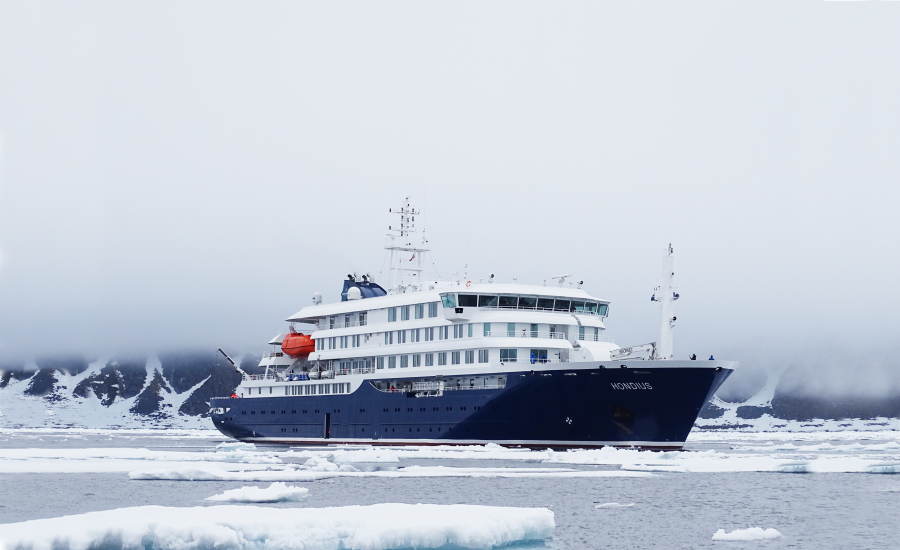
A suspected hantavirus outbreak aboard the MV Hondius, a cruise ship operated by Oceanwide Expeditions, has resulted in three deaths and seven total cases.
The World Health Organization reports two laboratory-confirmed and five suspected cases among 149 passengers and crew off the coast of Cape Verde. The first death occurred April 11 in a 70-year-old Dutch man; his wife died April 26 after a positive test.
A German woman died May 2 from unknown causes. One British national is in critical condition in South Africa, and three remain symptomatic onboard.
Rodent-borne hantavirus typically causes hantavirus pulmonary syndrome or hemorrhagic fever with renal syndrome, though the specific strain here is unconfirmed. The ship is now isolated, with disembarkation plans under review.
The outbreak underscores the vulnerability of closed maritime environments to zoonotic spillover, even for rare pathogens. Investigators are testing to determine transmission routes and whether rodent infestations played a role.
Key facts:
Seven total cases: two lab-confirmed, five suspected.
Three deaths occurred between April 11 and May 2.
Ship has 149 people from 23 nationalities off Cape Verde.
One patient in critical care in South Africa, lab-confirmed hantavirus.
Why it matters: This outbreak is a rare maritime cluster of hantavirus, a disease usually linked to rural rodent exposure. It tests international health response protocols for atypical settings like cruise ships, where quarantine and evacuation are logistically complex.
The cruise industry and port authorities may revise pre-boarding rodent inspections and onboard surveillance. Watch for WHO and CDC guidance on environmental testing and the final diagnosis of the German fatality, which could clarify the pathogen's lethality.
5. Hantavirus outbreak on cruise ship leads to 3 deaths, 40 disembarked without tracing

Around 40 passengers from the MV Hondius disembarked at St Helena without contact tracing, nearly two weeks after the first death.
The Dutch-flagged expedition vessel, carrying 150 people from 23 countries, is now sailing to the Canary Islands under strict measures. Three deaths have been linked to the Andes strain of hantavirus, which can spread through close human contact.
Two seriously ill patients were evacuated to the Netherlands, and a third remains in stable condition on a delayed flight. The WHO confirmed the strain as Andes, the only hantavirus known to transmit person-to-person via close contact.
Authorities in Europe, South Africa and Argentina are conducting contact tracing and laboratory testing to contain the outbreak.
Key facts:
3 deaths from hantavirus on MV Hondius cruise ship
~40 passengers left at St Helena without contact tracing
Two seriously ill patients evacuated to the Netherlands
WHO confirms Andes strain with limited human-to-human transmission
Ship carrying 150 people from 23 countries now heading to Canary Islands
Why it matters: The outbreak demonstrates the amplified risk of Andes hantavirus in closed settings like cruise ships, where its person-to-person capability can fuel rapid spread.
Gaps in contact tracing at St Helena may allow undetected chains of transmission across multiple countries. International health agencies now face a complex, multi-continent coordination effort to track exposed individuals from 23 nationalities.
6. Zero Illnesses After CDC Monitors 18 Americans Exposed to Andes Hantavirus on Cruise
The CDC closed its hantavirus response on June 24, 2026, after all 18 Americans exposed to Andes virus on the MV Hondius cruise ship completed a 42-day monitoring period without developing illness.
The outbreak, which began April 1, 2026, off Argentina, killed 3 of 13 confirmed cases aboard the ship.
Andes virus is unique among hantaviruses for its ability to spread person-to-person, prompting the CDC to use dedicated federal transport and quarantine facilities at the University of Nebraska Medical Center and Emory University.
Twelve of the 18 were later transitioned to state-supervised home monitoring, while six remained in federal quarantine for the full period.
International contact tracing tracked 188 high-risk contacts across seven countries, coordinated with public health authorities in multiple nations.
Key facts:
13 confirmed hantavirus cases and 3 deaths on the MV Hondius cruise ship.
18 Americans repatriated via federal transport to quarantine centers on May 2–6, 2026.
Zero of the 18 monitored individuals developed hantavirus pulmonary syndrome.
Case fatality rate among severe pulmonary syndrome patients is approximately 38%.
Monitoring period set at 42 days, twice the virus's maximum incubation time.
Why it matters: This outcome provides a validated, documented protocol for managing future exposures to pathogens with human-to-human transmission, like Andes hantavirus.
The CDC's use of dedicated federal transport, centralized quarantine, and staged release to home monitoring offers a scalable model for public health responses to high-consequence zoonotic outbreaks.
The zero-illness result reduces immediate panic but underscores the need for continued investment in federal quarantine infrastructure and international contact tracing capabilities.
7. Moderna stock surges 12% on early hantavirus vaccine research
Moderna shares rose 12% on Friday after the company confirmed early-stage mRNA vaccine research against hantaviruses, coinciding with a rare cluster of seven cases (two confirmed, five suspected) aboard the cruise ship MV Hondius.
Three passengers have died and one remains critically ill. The vessel traveled from Argentina through Antarctic waters and is now anchored off Cape Verde.
No hantavirus vaccine is approved anywhere. Moderna’s preclinical work is done with the U.S. Army and Korea University, but human trials have not started.
Public-health officials, including the WHO, assess the broader risk as low since hantaviruses are primarily rodent-borne and human-to-human transmission is rare.
The outbreak has heightened attention on a virus with no existing vaccine, but Moderna’s research began before the cluster was identified. The company’s revenue has dropped sharply since COVID-19 vaccine demand collapsed, falling 40% in 2025 to $1.94 billion.
Key facts:
Moderna shares closed 12% higher on Friday, best day in over two months.
Seven hantavirus cases (2 confirmed, 5 suspected) linked to cruise ship MV Hondius.
Three deaths and one critically ill patient reported from the outbreak.
No approved hantavirus vaccine exists anywhere in the world.
Moderna's 2025 revenue dropped 40% to $1.94 billion.
Why it matters: The outbreak provides a real-world spotlight for Moderna’s early-stage hantavirus vaccine work, potentially accelerating interest and funding for a pathogen that has long lacked a market.
For global health authorities, the cluster underscores gaps in surveillance and response capacity for rodent-borne viruses in travel settings.
Moderna’s stock surge reflects retail optimism about a new vaccine pipeline, but the company still faces a steep revenue decline and the long road from preclinical research to human trials.
Watch for WHO or CDC updates on the MV Hondius investigation and any signs of expanded research partnerships.