FDA keeps medical robots under trained surgeons; Johns Hopkins seminar examines robotic coaching
Both developments define medical robotics around human expertise: FDA-cleared systems support trained physicians, while A. Michael West Jr.'s Johns Hopkins research examines how robots could assess and coach movement. The key tension is between emerging ambitions—including telesurgery and future coaching—and the current limits of clinical authorization and evidence.
Friday, Sep 25, 2026
Tracking: Medicine Robotics · AI Medicine · AI Healthcare
FDA Framework Keeps Human Surgeons in Control of Medical Robots
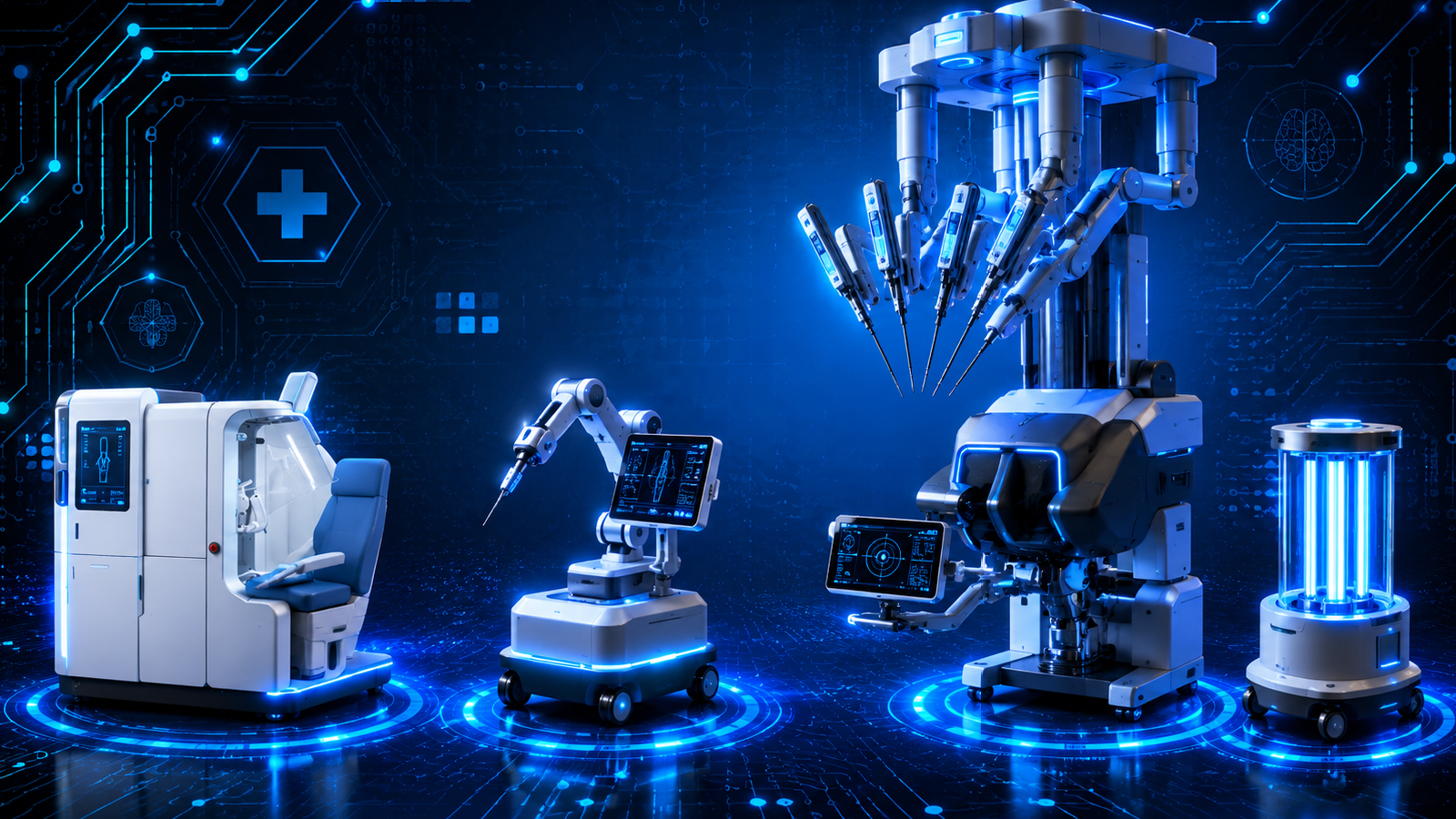
Medical robotics is advancing faster than its regulatory labels. The FDA groups robotically assisted surgical devices under “computer-assisted surgical systems,” covering tools for planning, navigation, and augmenting a surgeon’s abilities.
It has cleared these systems only for trained human physicians, while autonomous and semi-autonomous systems represent the highest-risk medical-device category.
The gap is clearest in telesurgery: cardiac procedures have already been performed across borders, including an operation led by a surgeon in India on a patient 12,500 miles away in Guyana. Yet the FDA has not cleared a robotic platform for telesurgery.
For manufacturers, authorization still runs through 510(k), De Novo, or Premarket Approval, and regulatory strategy can determine whether a system reaches market, how quickly, and whether it overcomes reimbursement hurdles.
Key facts:
FDA classifies robotically assisted surgical devices as computer-assisted surgical systems.
FDA has cleared these systems only for use by trained human physicians.
An India-based surgeon operated on a Guyana patient 12,500 miles away.
FDA has not cleared a robotic platform for telesurgery.
Marketing authorization routes are 510(k), De Novo, and Premarket Approval.
Why it matters: The technology already supports highly remote procedures, but regulatory approval still depends on human physician control.
That creates a clear boundary for developers: greater autonomy may expand clinical capability while sharply increasing evidence and review requirements.
For medical-device companies and investors, regulatory planning is central to timelines, commercialization, and reimbursement prospects.
The key issues to watch are how the FDA handles autonomous surgical functions and whether it develops an authorization pathway for telesurgery platforms.
Johns Hopkins Seminar Explores Robotic Coaching for Rehabilitation and Surgery

Johns Hopkins University scheduled a Sept. 23 seminar by A. Michael West Jr., a postdoctoral fellow in its Haptics and Medical Robotics Laboratory.
His talk, “Understanding and Improving Human Movement: From Latent Structure to Robotic Coaching,” links studies of movement perception, dexterous manipulation and robotic surgery, including how people infer hidden physical properties from observed motion.
West’s research uses simple, interpretable models to identify low-dimensional, or “latent,” patterns in human movement, including how coordination changes with expertise.
The stated goal is to translate those insights into robotic systems that can measure movement, assess skill acquisition and eventually support coaching in rehabilitation and surgical training.
The seminar is a research development, not evidence of a deployed clinical robot or validated patient outcome.
West is due to join Georgia Tech in August 2027, where he is recruiting doctoral students for work spanning rehabilitation robotics, surgical robotics and human-robot interaction.
Key facts:
Johns Hopkins scheduled West’s seminar for September 23, 2026.
West is a postdoctoral fellow in Johns Hopkins’ Haptics and Medical Robotics Laboratory.
His studies cover movement perception, dexterous manipulation and robotic surgery.
West plans to join Georgia Tech as an assistant professor in August 2027.
He is recruiting doctoral students for a research group launching in Fall 2027.
Why it matters: The research points toward robots that do more than execute movements: they could help quantify how people learn physical skills.
If the approach translates successfully, rehabilitation patients and surgical trainees could become users of systems that assess coordination and provide personalized coaching, although the source establishes an objective rather than a clinical result.
The near-term development is academic capacity, not healthcare deployment.
The next signals to watch are whether West’s future group turns these interpretable movement models into tested robotic coaching systems and whether those systems demonstrate value in rehabilitation or surgical training.