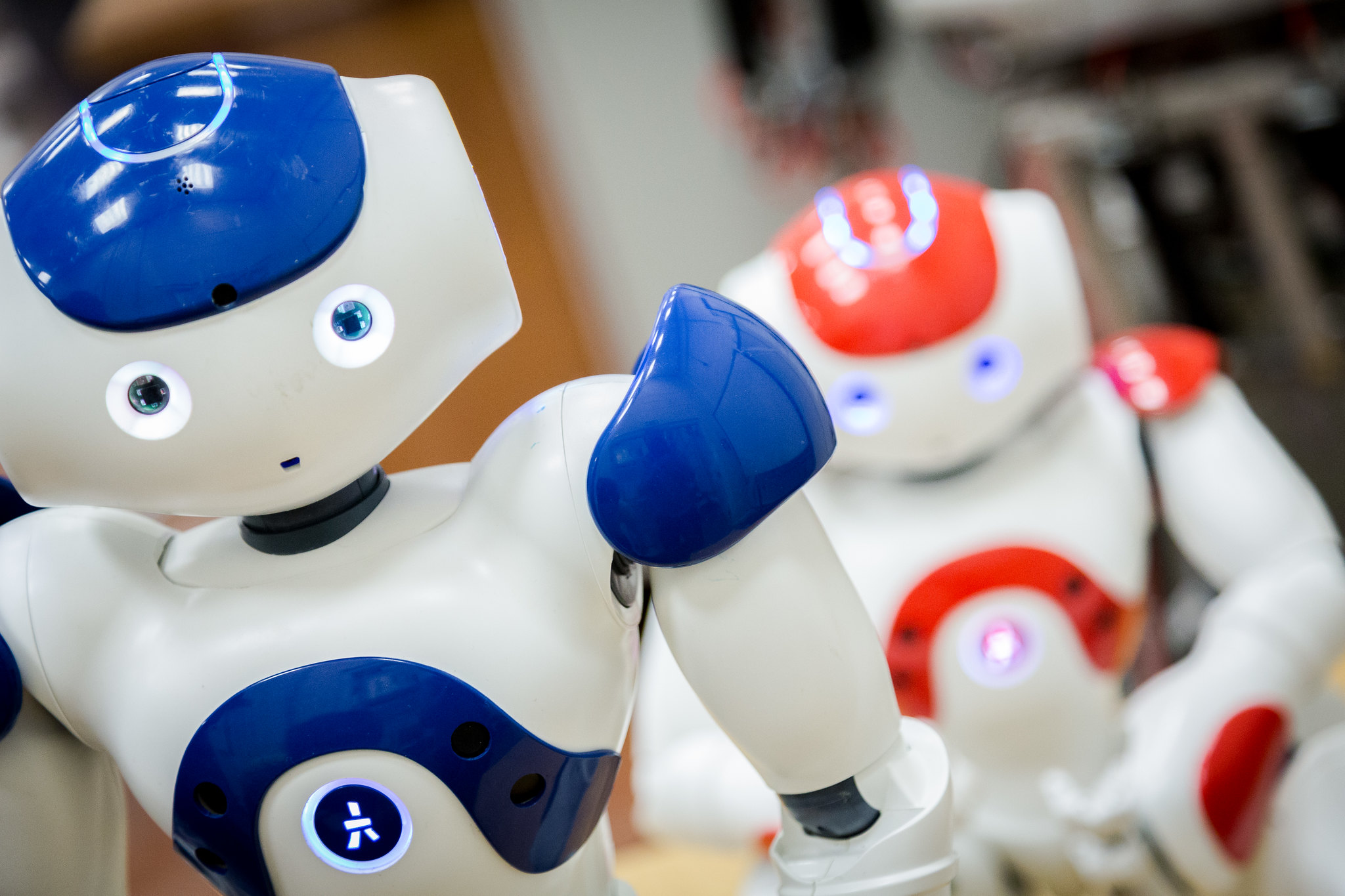
AI Robotics in Medicine
PublicTracking updates in AI Robotics in the healthcare industry
Munich Summit Spotlights AI Medicine and Brain-Computer Implants
Friday, Jun 12, 2026
Munich’s DLD Health x BAIOSPHERE showcased AI’s medical frontier—culminating in a session on Europe’s first 256‑microelectrode brain‑computer implant—while AI Insider highlighted 20 CEOs pushing AI from demos into clinical workflows.
The through-line is maturation: from headline breakthroughs and prevention-to-clinic agendas to workflow-native tools like Abridge’s ambient EHR notes and Accolade’s human-guided navigation, echoed by Aledade’s data-and-incentives strategy.
Watch the balance between invasive innovation and cost‑conscious, outcomes‑driven deployment, where rigorous medicine meets time‑saving, EHR‑embedded systems.
Tracking: Medicine Robotics · AI Medicine · AI Healthcare
1. Munich Conference Puts AI Medicine and Brain-Computer Interfaces Center Stage
DLD Health x BAIOSPHERE convened about 400 participants at Munich’s Literaturhaus on June 12, 2026, to examine AI’s role in medicine.
Co-hosted by DLD’s Steffi Czerny and Alessia Sinzger with BAIOSPHERE’s Michael Klimke, the program spanned prevention, clinical use, and brain-computer interfaces.
Speakers ranged from Bavarian leaders Markus Söder and Markus Blume to Nobel laureate Ferenc Krausz, AI pioneers Jürgen Schmidhuber and Björn Ommer, and Google Health’s Susan Thomas.
A standout session, “Invasive Brain-Computer Interface Implantation,” brought TUM neurosurgeons Bernhard Meyer and Simon Jacob onstage with patient Michael Mehringer.
Mehringer became the first person in Europe with a 256‑microelectrode BCI implant in July 2025; Meyer and Jacob earlier performed the world’s first BCI implant in a stroke patient with severe aphasia in 2022.
Organizers linked today’s agenda to Burda’s 1995 Mind Revolution neuroethics forum and DLD’s long record of spotlighting breakthroughs early.
Key facts:
- About 400 participants attended DLD Health x BAIOSPHERE in Munich on June 12, 2026.
- The program centered on AI medicine, from prevention to clinical use and brain-computer interfaces.
- A BCI panel featured TUM’s Bernhard Meyer, Simon Jacob, and patient Michael Mehringer.
- Mehringer received a 256‑microelectrode BCI implant in July 2025, a European first.
- In 2022, Meyer and Jacob performed the world’s first BCI implant for severe aphasia.
Why it matters: The lineup signals a tightening link between policymakers, clinicians, and AI researchers in Bavaria, increasing the odds that lab advances translate into clinical practice.
A patient onstage alongside surgeons underscores that invasive BCIs are moving from theory to real-world trials in Europe.
Expect growing attention to safety, durability, and rehabilitation outcomes for implants, and to governance questions—data standards, ethics, and reimbursement—raised by AI-enabled care.
Watch for follow-on clinical studies, cross-sector partnerships, and regulatory steps that could determine how quickly these technologies reach patients.
2. AI Insider spotlights 20 CEOs driving AI’s healthcare transformation in 2026
AI Insider’s 2026 list spotlights 20 CEOs building the next decade’s AI healthcare stack, from ambient clinical intelligence to drug discovery and mental health.
The profile of Abridge’s Shiv Rao captures the shift: his ambient AI listens to clinician‑patient visits and turns them into structured, billable notes inside the EHR, returning hours of documentation time daily.
Abridge raised $300 million in July 2025, bringing total funding to roughly $778 million at a $5. 3 billion valuation, with repeat recognition from Forbes AI 50, Fortune AI 50, and Best in KLAS in 2025 and 2026.
Accolade CEO Rajeev Singh is leaning on an AI navigation layer that blends clinical data, claims, and live conversations to steer members, expanding to second opinions, mental health, and chronic conditions—pursuing outcomes “no algorithm alone can achieve.
” Aledade co‑founder Farzad Mostashari, former National Coordinator for Health IT who oversaw $13 billion in HITECH incentives, bet in 2014 that data and aligned incentives could let independent primary care outperform hospital consolidation.
The mix of physician‑founders and operators underscores AI’s shift from demos to workflow‑embedded, cost‑conscious care.
Key facts:
- July 2025: Abridge raised $300M Series E at a $5.3B valuation.
- Abridge won Best in KLAS for Ambient AI in 2025 and 2026.
- Farzad Mostashari oversaw $13B in HITECH EHR adoption incentives.
Why it matters: Embedding AI at the point of care and within benefits navigation targets two chronic pain points: clinician time and avoidable utilization.
Clinicians gain hours back via ambient documentation; self‑insured employers get guidance designed to reduce unnecessary care while improving outcomes.
Independent primary care could gain leverage from data and aligned incentives, while hospital‑centric models and point solutions tied to documentation burden may lose ground.
Watch evidence on clinical outcomes and utilization, depth of EHR integration, employer ROI, and Abridge’s long‑term IPO horizon as signals of durable adoption.