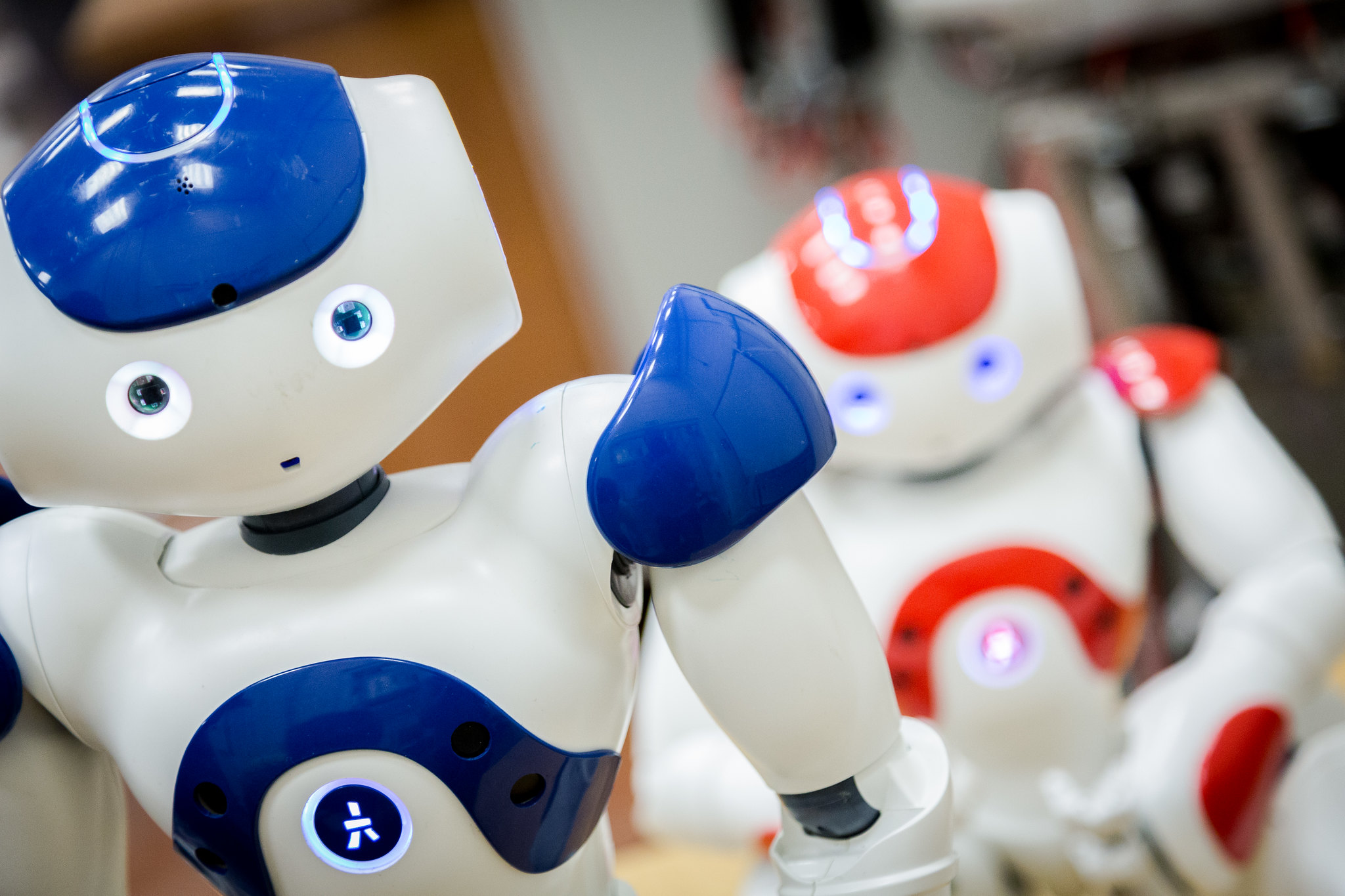
AI Robotics in Medicine
PublicTracking updates in AI Robotics in the healthcare industry
Generative Health AI to $30.4B; Spine Surgery Advances
Wednesday, Apr 29, 2026
newsltr Intelligence Brief
Wednesday, April 29, 2026
Generative healthcare AI is shifting from pilots to practice, with the sector projected to grow from $1.6B in 2022 to $30.4B by 2032 (diagnosis leading by revenue), as Mayo Clinic spotlights AI, robotics, and motion-preserving implants that offer alternatives to fusion in spine surgery. The through-line is pragmatic clinical integration: transcription and record-completion entering daily use and image-guided, robot-assisted planning, balanced by Imperial College's warning against over-trust and ongoing data-privacy and cybersecurity risks. Watch whether diagnostic and treatment decision support meaningfully improve recovery and quality of life alongside motion-preserving approaches, while capital-market signals (GeneDx in rare disease; Pfizer's biomolecular AI push despite near-term earnings pressure) shape expectations for adoption.
Tracking: Medicine Robotics · AI Medicine · AI Healthcare
Geography: United States, European Union, United Kingdom, China, Japan, South Korea, India, Israel, Singapore, Canada, Germany, France, Switzerland, Boston, San Francisco Bay Area, Minneapolis–St. Paul, London, Cambridge (UK), Oxford, Tel Aviv, Beijing, Shanghai, Shenzhen, Tokyo, Seoul, Bengaluru, Zurich, Basel, Singapore (city-state)
1. Generative healthcare AI forecast hits $30.4B as clinical adoption accelerates
Generative AI in healthcare is transitioning from pilots to practice amid rapid market expansion and early clinical footholds. A new Allied Market Research report values the sector at $1.
6 billion in 2022 and projects $30. 4 billion by 2032 (34.
9% CAGR), with diagnosis the leading application by revenue.
Imperial College London underscores that transcription and record‑completion tools have led AI’s entry into daily clinical use, with diagnostic and treatment decision support close behind, while cautioning against over‑trust.
On the capital markets side, Simply Wall Street spotlights GeneDx—a $427. 5 million revenue genomics player using AI in rare disease—and Pfizer, which is pursuing biomolecular AI alongside its therapeutics portfolio but faces near‑term earnings pressure.
At the company‑building level, educator Esther Wojcicki is helping launch an AI healthcare residency program aimed at helping startup co‑founders get along.
Across use cases, adoption spans image analysis, workflow automation, and precision medicine, tempered by data‑privacy and cybersecurity risks.
Key facts:
- Generative healthcare AI projected to reach $30.4B by 2032 at 34.9% CAGR.
- Market valued at $1.6B in 2022, per Allied Market Research.
- Diagnosis led in 2022, over two-fifths of generative AI revenue.
- Imperial College: transcription tools lead clinical entry; diagnostic support is next.
- GeneDx reported $427.5M revenue, largely from AI-enabled rare disease genomics.
Why it matters: Providers and payers stand to gain from efficiency in documentation and diagnostics, while genomics and imaging vendors are positioned for near-term revenue as clinical use expands. However, winners will be those that prove safety, interoperability, and ROI—and can navigate privacy and cybersecurity constraints highlighted by market research. Investors should watch regulatory clearances and reimbursement for diagnostic and documentation tools, real‑world outcomes data, and whether pharma translates AI discovery momentum into marketed therapies. Talent pipelines, including new founder-focused programs, may influence which startups scale sustainably.
2. Mayo Clinic Spotlights AI, Robotics, Motion-Preserving Implants in Spine Surgery
Advances in robotics, artificial intelligence, and motion-preserving implants are reshaping spine surgery options, according to Mayo Clinic orthopedic surgeon Ahmad Nassr, M.D. Rather than defaulting to fusion, patients with degenerative conditions can increasingly receive artificial disc replacements and other devices that preserve flexibility.
Nassr served as principal investigator in randomized trials that helped secure FDA approval of the TOPS replacement device for pinched nerves and spondylolisthesis, and Mayo Clinic was the first U.S. center to implant the FDA-approved MID-C system for scoliosis.
He notes that low back pain is the leading global cause of disability, disproportionately affecting older adults, making these innovations clinically consequential.
Robotic-assisted platforms integrated with CT and MRI enable surgeons to preplan implant trajectories, while minimally invasive approaches, targeted nerve blocks, and 3D printing of patient-specific spine models are reducing muscle disruption, postoperative pain, and hospital stays.
Collectively, these tools allow more tailored procedures and may support faster recovery and improved quality of life.
Key facts:
- Low back pain is the world’s leading cause of disability, especially affecting the elderly.
- Dr. Ahmad Nassr led Mayo randomized trials supporting FDA approval of the TOPS device.
- Mayo Clinic performed the first U.S. implant of FDA-approved MID-C for scoliosis.
- Robotic-assisted platforms with CT/MRI enable precise implant pathway planning before surgery.
- Minimally invasive techniques reduce postoperative pain and shorten hospital stays.
Why it matters: These developments tilt spine care toward personalization, preserved mobility, and shorter stays—attractive for patients and hospitals managing capacity. FDA-cleared motion-preserving implants backed by randomized trials can accelerate payer acceptance versus traditional fusion, reshaping device mix and training priorities. Preoperative planning with robotics and 3D printing favors centers that invest in imaging, navigation, and additive manufacturing, potentially widening capability gaps. Watch durability data and long-term outcomes for TOPS, MID-C, and next‑generation facet–disc replacements; their real-world performance will determine adoption and reimbursement trajectories.
Generated by newsltr · 2026-04-29T18:50:04.884Z