The U.S.-Iran Ceasefire Is Unraveling on Every Front
The June U.S.-Iran framework initially paused fighting, eased pressure on the Strait of Hormuz, and opened a 60-day path toward broader negotiations, but renewed strikes and competing accounts of the deal have put the ceasefire under severe strain. The central unresolved issues are Iran’s enriched-uranium stockpile and IAEA access, sanctions relief, Hormuz control, and the wider military balance—including U.S. access to regional bases and the IRGC’s role.
Thursday, Aug 27, 2026
Tracking: Iran War
Geography: Iran, Israel, Middle East, Persian Gulf, Gaza, Lebanon, Syria, Iraq, Yemen
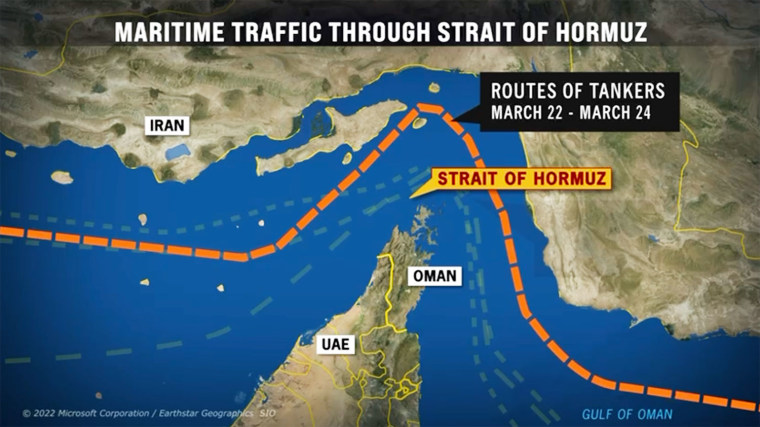
U.S. and Iran Release Framework to End War and Reopen Strait of Hormuz

The United States and Iran announced an agreement on June 14 to halt fighting and reopen the Strait of Hormuz.
Washington released the 14-point memorandum on June 17; formal signing is scheduled for June 19, beginning a 60-day period for negotiating a final settlement.
The document calls for an immediate and permanent end to military operations on all fronts, including Lebanon.
The United States will remove its naval blockade within 30 days, while Iran will facilitate commercial passage without charges for 60 days and discuss the strait’s future administration with Oman and other Gulf states.
Nuclear talks will address Iran’s highly enriched uranium stockpile and enrichment capabilities, while Washington says sanctions relief depends on Iranian implementation.
Iranian officials and IRGC-linked media dispute that interpretation and claim Tehran retains management authority over the waterway.
Key facts:
- June 14: U.S. and Iran announced the agreement; formal signing is scheduled for June 19.
- The memorandum declares termination of military operations on all fronts, including Lebanon.
- The United States will remove its naval blockade within 30 days.
- Iran promises commercial passage without charges for 60 days.
- Nuclear talks will address Iran’s enriched uranium stockpile and enrichment capacity.
Why it matters: The framework immediately reduces the risk of wider U.S.-Iran escalation and offers Gulf exporters a route toward restoring traffic through a chokepoint carrying roughly one-fifth of global oil and gas trade.
Falling oil prices reflected that expectation, although prices remained elevated compared with before the war. The agreement’s durability depends on unresolved interpretations.
Washington expects a toll-free strait and conditional economic relief; Tehran signals continued authority over maritime management and possible future service fees.
Israel also remains a major obstacle: Israeli leaders say forces will stay indefinitely in territory seized in Lebanon, Gaza and Syria, while the memorandum formally includes Lebanon’s front.
The next tests are implementation, mine-clearance and shipping access, Israeli compliance, and whether nuclear talks produce limits on Iran’s stockpile and enrichment.
U.S.-Iran truce collapses as strikes and blockade continue

Washington and Tehran’s June agreement initially halted the confrontation’s most dangerous pressure points: the United States lifted its naval blockade, oil tankers moved through the Strait of Hormuz, and both sides began a 60-day process toward a broader settlement.
Iran’s Supreme Leader Mojtaba Khamenei also endorsed future face-to-face talks, while U.S. officials said Tehran would destroy enriched uranium and permit International Atomic Energy Agency inspections.
By July 15, however, the arrangement had sharply deteriorated. U.S. Central Command said American forces had launched strikes for a sixth consecutive night and were enforcing an ongoing blockade, while Iranian drones targeted Kuwait and other regional sites.
The White House said dialogue remained possible, but the agreement’s nuclear and regional commitments now face implementation amid renewed military escalation.
Key facts:
- CENTCOM said U.S. forces launched strikes for a sixth consecutive night on July 15.
- The U.S. redirected three vessels, disabled one, and boarded another under the blockade.
- June’s agreement set a 60-day window for a broader settlement and required reopening Hormuz.
- Mojtaba Khamenei endorsed future face-to-face talks without accepting Washington’s position.
- Iran was reported to invite IAEA inspections and identify locations of enriched material.
Why it matters: The sequence shows that the June deal delivered immediate tactical relief but failed, at least initially, to stabilize the conflict.
Reopening Hormuz eased a major energy risk and addressed the oil-price shock that Trump cited, while renewed blockade enforcement again threatens shipping and regional energy security.
IEA chief Fatih Birol warned that continued disruption would leave the world concerned about oil security.
The diplomatic channel remains open, but its credibility now depends on whether fighting can be contained long enough for technical negotiations, nuclear inspections, and enriched-uranium accounting to begin.
Washington also faces domestic and Israeli criticism that the agreement conceded too much, while Iran faces renewed pressure over its nuclear stockpile, proxy support, and access to reconstruction benefits.
Vance Says Iran Agreed to Restore IAEA Access

An IAEA report issued June 4 said inspectors still could not verify parts of Iran’s declared uranium inventory after US-Israeli strikes and months without access to several affected facilities.
The agency said it had lost “continuity of knowledge” over some material, including Iran’s stockpile enriched to as much as 60 percent; it did not say the uranium had been diverted to weapons use.
Pressure intensified on June 12, when the IAEA Board of Governors demanded an immediate stockpile report, while Iran called the demands excessive.
But diplomacy then produced a possible verification channel: on June 22, Vice President JD Vance said Iran had agreed to let IAEA inspectors return, under a June 19 memorandum giving negotiators up to 60 days for a comprehensive deal.
The reported arrangement still leaves the stockpile’s location and status unresolved.
Key facts:
- IAEA said June 4 it could not verify some declared LEU and 60%-enriched uranium stocks.
- Iran reportedly held 440.9 kilograms enriched to 60%, though its location remained unknown.
- The IAEA Board resolution passed June 12 with 21 of 35 votes.
- Russia, China and Niger opposed the resolution; 10 countries abstained.
- Vance said June 22 Iran agreed to restore IAEA access during Swiss talks.
Why it matters: The immediate issue is not evidence that Iran has built a nuclear weapon, but the loss of reliable oversight over sensitive uranium.
That uncertainty weakens the ability of the IAEA, the United States and other governments to judge whether military strikes damaged, displaced or merely obscured Iran’s nuclear capability.
A return of inspectors could give negotiators a factual basis for settling the stockpile dispute and testing Iran’s pledge not to acquire nuclear weapons.
But the June 12 vote also showed divided international backing for pressure on Tehran, while the 60-day negotiating window leaves access, enrichment limits and stockpile disposition unresolved.
Delays or failed talks would preserve the verification gap that military action has not closed.
Iran-US MOU halts fighting, but nuclear and sanctions terms remain disputed

On June 15, the United States and Iran announced a memorandum of understanding (MOU) that halted military operations, extended a ceasefire, and set out the reopening of the Strait of Hormuz.
The framework created 60 days for negotiations on sanctions and Iran’s nuclear program, while a signing ceremony was planned for June 19 in Geneva. By June 23, the pause had not produced a shared account of the bargain.
Washington said Iran would permit International Atomic Energy Agency inspections and that released funds would be held in U.S.-controlled escrow for American food and medicine; Tehran denied both the inspection timetable and restrictions on spending, while Iranian media reported—but Washington did not confirm—$12 billion in frozen-asset relief.
The unresolved uranium stockpile, sanctions terms, Hormuz procedures, and mine clearance leave the ceasefire a conflict-management mechanism rather than a settled peace.
Key facts:
- June 15: Trump and Iran announced an MOU ending military operations and extending a ceasefire.
- Talks on sanctions and Iran’s nuclear program are scheduled for 60 days.
- U.S. sanctions on Iranian oil were waived for 60 days after the first talks.
- Iranian officials denied agreeing to a new schedule for IAEA inspections.
- Washington described unfrozen assets as escrowed for U.S. food and medical purchases.
Why it matters: The MOU buys Washington and Tehran time while potentially restoring maritime traffic through Hormuz.
The oil-sanctions waiver gives Iran immediate economic relief, but the agreement’s sequencing leaves Tehran with leverage: analysts say control of the strait could be used to delay nuclear concessions, while the MOU could unravel without a follow-on deal.
Israel’s continued operations against Hezbollah and the Gaza war remain outside the agreement’s control, and the Atlantic Council reports that Israel appears opposed to a final arrangement.
The next tests are formal signature, mine clearance, verified IAEA access, the fate of Iran’s enriched uranium, and precise sanctions and asset-release terms.
Missile launches collide with fragile U.S.-Iran ceasefire talks

Iran launched missiles at unidentified targets in southern Iran on May 28, after the Pentagon said Tehran fired a ballistic missile toward Kuwait and deployed attack drones near the Strait of Hormuz.
Kuwaiti forces intercepted the missile, while U.S. forces intercepted five drones and stopped a sixth launch, according to U.S. Central Command, which called the incident a ceasefire violation.
The strikes came as Washington said it and Tehran had mostly agreed on a 60-day memorandum to extend the ceasefire and begin nuclear negotiations, though President Donald Trump had not approved it and Iran had not publicly confirmed it.
The proposed terms include Iran turning over highly enriched uranium, abandoning pursuit of a nuclear weapon, and keeping Hormuz open; meanwhile, Washington sanctioned Iran’s Persian Gulf Strait Authority and threatened actors involved in tolls.
Key facts:
- CENTCOM said Kuwaiti forces intercepted an Iranian ballistic missile on May 28.
- U.S. forces intercepted five Iranian attack drones and prevented a sixth launch near Hormuz.
- Washington and Tehran reportedly mostly agreed to a 60-day ceasefire memorandum.
- Trump had not approved the memorandum, and Iran had not publicly confirmed it.
- Treasury sanctioned Iran’s Persian Gulf Strait Authority on May 27.
Why it matters: The immediate pattern is simultaneous bargaining and coercion: military incidents continue while diplomats discuss extending the ceasefire.
Any agreement would need to address both Iran’s nuclear program and access through Hormuz, where shipping had slowed sharply and Washington is threatening sanctions over proposed tolls.
The earlier shipping movements reported by CBS News—including a South Korean tanker’s passage and the departure of two Chinese tankers—raised hopes that maritime traffic could normalize.
The later missile and drone activity points in the opposite direction, leaving the next steps dependent on Trump’s approval, Iranian confirmation, and whether the ceasefire violations stop.
Iran-US Ceasefire Leaves Bases, Nuclear Monitoring and IRGC Under Pressure
An Iran-US ceasefire announced June 15 has been overtaken by evidence of a more unstable aftermath.
By July, Iran International described renewed war, growing economic and human costs, and domestic criticism of hardliners favoring continued confrontation; Britain also criminalized support for the IRGC. The military balance remains contested.
Defence Security Asia relayed retired General Barry McCaffrey’s unconfirmed judgment that the United States had probably permanently lost access to 15 Gulf bases after Iranian missile and drone attacks, prompting contingency planning around dispersed alternatives.
A UN warning that officials have lost continuity of knowledge about Iran’s nuclear programme shows the conflict has damaged not only military infrastructure, but also the ability to track Tehran’s activities.
Together, the reporting points to a ceasefire that paused fighting without resolving disputes over Iran’s nuclear programme and regional military reach, US access, and the IRGC’s role.
Key facts:
- On June 15, Iran and the United States agreed to end months of conflict and pursue negotiations.
- On July 17, Britain designated the IRGC under its State Threats Act.
- IRGC support or material assistance can bring 14 years’ imprisonment in Britain.
- A UN official warned of lost continuity of knowledge about Iran’s nuclear programme.
- Barry McCaffrey estimated 15 US Gulf bases may have been permanently lost.
Why it matters: Washington may retain overwhelming strike power while facing less reliable access to the Gulf.
McCaffrey’s estimate is not a confirmed Pentagon finding, but the reported review of reconstruction, replacement, or dispersal would signal a major shift in how the United States sustains operations and deterrence in the region.
For Tehran, missile and drone attacks demonstrated that residual capabilities can impose costs despite extensive military losses.
The British IRGC designation adds legal pressure on the organization and people supporting it, while Iranian criticism of hardliners strengthens the domestic case for diplomacy without demonstrating a policy reversal.
The nuclear knowledge gap could further complicate any final agreement, because negotiations now face weaker visibility into Iran’s programme.